Wednesday, January 8, 2020

Wartime Wednesday: Daredevil Adeline Gray


Wartime Wednesday: Daredevil Adeline Gray


Prior to the outbreak of World War II, parachutes were made of silk. When Japan became an enemy of the U.S. after the attack at Pearl Harbor, trade relations were cut off, and the military needed to find another fabric that would be as effective. Enter nylon.

Invented in 1935 by Wallace Hume Carothers at DuPont’s research facility, nylon was first used for toothbrushes bristles in 1938. Women’s stockings were exhibited at the 1939 World’s Fair in New York and weren’t sold commercially until 1940. However, the product was met by distrust and fear by the general public because a newspaper article claimed that one of the chemicals used in nylon’s production was extracted from corpses. A lengthy advertising campaign finally squelched the rumors by 1942.

The government was tentatively optimistic about producing nylon parachutes and contracted with Pioneer Parachute in Manchester, Connecticut to have a prototype manufactured. As with any new piece of equipment, tests had to be conducted to determine viability. By June 1942 it was time to make the first jump with the nylon parachute. Who would be selected?

Twenty-four-year-old Adeline Gray had been working as a parachute rigger with the company for five years. Prior to her employment at Pioneer, she had been a sky diver who made her reputation as a female dare devil jumper. Born in 1917 and raised in Oxford, Connecticut, she was infatuated from a young age with the idea of parachuting. Stories are told about her jumping from the loft of a barn into bales of hay, holding an umbrella to slow her fall. After high school she learned how to pack and repair chutes, and made her first jump from a height of 2,000 feet at the New Haven Municipal Airport.

With thirty-three jumps under her belt, and as the only female licensed parachute jumper in the state, Adeline made an excellent candidate. More than fifty senior military officers lined up at Brainerd Field in Hartford to watch her jump. The leap and landing were a success, moving the manufacture of chutes from silk to synthetics.

The New York Times marveled at her confidence: “As calmly as if she were going out on the porch to bring in the daily paper…[she] stepped out of an airplane.” Adeline’s new-found nationwide fame opened other doors, and she found herself featured as a heroine in True Comics.
_____________________________

It’s been six months since Ruth Brown followed clues to England and discovered the identity of her sister’s killer. War continues to rage as Ruth reports on food shortages, the black market, evacuation of London’s children, and the bravery of the British people.

When a bombing raid destroys her home and unearths a twenty-year-old skeleton in the cellar, her reporter’s senses tingle in anticipation of solving another mystery. Unfortunately, the by-the-book detective inspector assigned to the case is not interested in her theories. As Ruth investigates the case on her own, she butts heads with the handsome policeman.

Will she get to the bottom of the story before he arrests her for interference?

AVAILABLE FOR PRE-ORDER (Book 2, Ruth Brown mystery series)

Purchase Link: https://amzn.to/35oUFbo


Tuesday, January 7, 2020

Traveling Tuesday: South Carolina During WWII


Traveling Tuesday: South Carolina During WWII

Bordered by North Carolina, the Atlantic Ocean, and Georgia across the Savannah River, South Carolina was the eighth state to ratify the U.S. Constitution in 1788. Less than one hundred years later, the state would be the first state to vote in favor of secession.

As with all states during the 1930s, South Carolina was caught in the throes of the Great Depression. However, prior to the U.S. entry into World War II, federal money began to flow through the construction and expansion of military and naval installations such as Camp Croft in Spartanburg, Fort Jackson in Columbia, and the Charleston Navy Yard.

After the war began, South Carolina’s agricultural sector more than doubled as farmers tried to keep up with wartime demands for cotton and produce. Labor shortages and low wages created challenges for the farmers who ultimately used German POWs as well as members of the Women’s Land Army.

The textile industry also saw a boom as manufacturers geared up to meet wartime needs, such as cotton consumption that increased over sixty percent. Before 1940, heavy industries such as aircraft and ammunition plants did not exist, so manufacturing had to be built. Kline Iron and Steel went into Columbia, and Carolina Industries of Sumter produced ship components that were delivered to Charleston for assembly.

An estimated 900,000 men received their military training in South Carolina, and over 180,000 South Carolinians (including 2,500 women) joined the armed forces. An interesting aside is that forty-one percent of those examined statewide were rejected for service, making the recruit rejection rate in South Carolina the second highest in the nation. Eight hundred posts were “manned” by over 12,500 aircraft spotters, while over a quarter of a million of the state’s residents supported the war effort through volunteerism. South Carolinians joined the rest of the U.S. in rationing from tires and gasoline to vegetables and seafood. By 1943, more than 330,000 Victory gardens dotted the landscape.

The state struggled as segregation laws came under pressure. A huge influx of non-South Carolinians brought different ideas and social customs which led to temporary changes, especially on the military bases. In 1944, the federal district court order the state to provide equal salaries to black and white teacher, and although segregation would remain firmly in place in the early post war period, seeds of change were planted leading to even more court decisions.
_____________________________

It’s been six months since Ruth Brown followed clues to England and discovered the identity of her sister’s killer. War continues to rage as Ruth reports on food shortages, the black market, evacuation of London’s children, and the bravery of the British people.

When a bombing raid destroys her home and unearths a twenty-year-old skeleton in the cellar, her reporter’s senses tingle in anticipation of solving another mystery. Unfortunately, the by-the-book detective inspector assigned to the case is not interested in her theories. As Ruth investigates the case on her own, she butts heads with the handsome policeman.

Will she get to the bottom of the story before he arrests her for interference?


AVAILABLE FOR PRE-ORDER (Book 2, Ruth Brown mystery series)

Purchase Link: https://amzn.to/35oUFbo


Thursday, January 2, 2020

Talkshow Thursday: Welcome back, Donna Schlacter


Talkshow Thursday: Welcome back, Donna Schlacter

Linda:  Thanks for joining me today. Congratulations on your upcoming release, Double Jeopardy. It sounds intriguing. Where did you find your inspiration for this story?

Donna: It’s amazing how inspiring this simple question from an editor can be: why aren’t you publishing with me?

Seriously, that’s what happened. Said publisher wanted a story with a cowboy on the cover. Or at least the potential for a cowboy on the cover.

LM: Research is important for any book, but especially so with regard to historic novels. Mining and ranching are part of Double Jeopardy. How did you go about researching these two topics, and was there an especially interesting fact you wanted to include in the story?

Donna: I visited the area, went to a mining museum, read some articles and books, watched a documentary or two, and did some online research. While Colorado is well-known for its gold rush, the silver rush came earlier but didn’t last long. I love to write about lesser-known facts, so settled on silver mining. One thing I learned was they used mules in silver mines, too, so I included a pair in the story.

LM: Your historical novels don’t center around one particular era. When you write, how do you go about choosing which time period to use, and do you have a favorite?

Donna: I usually look for that little nugget (no pun intended) of history or unsolved mystery, and set the story there.

LM: In addition to writing, you also have a speaking ministry, and offer critiquing, editing, and proofreading services. How do you juggle these activities with your personal time?

Donna: Personal time? LOL. Seriously, I’m a To-Do List fiend, so everything gets scheduled on my calendar. When I’m writing, I put an appointment for my butt in my chair and my fingers on the keys to write however many chapters I need to stay on goal. Same with other projects. Speaking in February? Outline in December. Write it in January. Practice it in February. Outline and PowerPoint to organizers whenever they want them. Just so.

LM: You’ve published numerous books. What advice do you have for fledgling writers?

Donna: Never be afraid to tell your story. It’s important because it is your story, and you’re the only one who can tell it.

LM: What is your next project?

Donna: A covered wagons collection. And then coming up with a new cozy mystery series for my alter ego.

LM: Where can folks find you on the web?

Donna: I’d love if you’d join me at my Double Jeopardy Facebook event on January 7th: https://www.facebook.com/events/2220456174726867/

And, if you’re in the Denver, Colorado area, join me at the Launch Party on January 7th at Bear Valley Church, 10001 W Jewell Ave, Lakewood, CO, 7-9 pm. There will be fun, light refreshments, games, prizes, and books to buy. I’ll be the one dressed up as Zeke Graumann’s mother.


www.HiStoryThruTheAges.com: Receive a free ebook simply for signing up for our free newsletter!

Books: Amazon: http://amzn.to/2ci5Xqq and Smashwords: http://bit.ly/2gZATjm
What Can Be Online University: online courses on the craft of writing
Etsy online shop of original artwork, book folding art, and gift items

Tuesday, December 31, 2019

Traveling Tuesday: A Southern New Year


Traveling Tuesday: A Southern New Year


I married into a southern family (roots that hearken from Florida, Tennessee, Mississippi, Texas, and Alabama), and part of my “orientation” included what meal to serve on New Year’s Day to bring the family good luck in the coming year. Without fail, my mother-in-law served black-eyed-peas, ham, collard greens, and cornbread. I’m not a big fan of the greens, so my husband and I now substitute spinach.


  • Peas and beans symbolize coins or wealth. Black-eyed peas are the most commonly used bean, but lentils or other beans are acceptable. Be sure to season them with pork, ham, or sausage.
  • Greens resemble money, especially folding money. Dishes are made using green leafy vegetables to ensure good fortune for the coming year. South favorites include collard, mustard, or turnip greens, cabbage or sauerkraut, kale, and chard.
  • Pork is considered a sign of prosperity in some cultures because pigs root forward. (versus lobster that moves backward and is considered bad luck)
  • Cornbread is supposed to symbolize gold because corn kernels represent coins. Combined with the peas and greens, it is said you’ll triple your luck by eating all three together.
Other traditional New Year’s Day foods include:

Hoppin’ John: a low country dish consisting of spicy black-eyed peas, rice, and fatback or ham hock. It is thought to represent one big pot of money.

Hog Jowl: represents wealth, but also ensures good health (considering the fat content, would doctors agree with this claim?)

Southern Caviar: A great appetizer, this black-eyed pea salsa combines the peas with corn, onions, tomatoes, and green chilies. Serve with golden corn chips for extra luck.

What traditions (food or otherwise) do you practice for New Year’s eve or day?

____________________________________

Releasing January 15, 2020

Under Ground (Book 2 of the Ruth Brown mystery series): 

It’s been six months since Ruth Brown followed clues to England and discovered the identity of her sister’s killer. War continues to rage as Ruth reports on food shortages, the black market, evacuation of London’s children, and the bravery of the British people.

When a bombing raid destroys her home and unearths a twenty-year-old skeleton in the cellar, her reporter’s senses tingle in anticipation of solving another mystery. Unfortunately, the by-the-book detective inspector assigned to the case is not interested in her theories. As Ruth investigates the case on her own, she butts heads with the handsome policeman.

Will she get to the bottom of the story before he arrests her for interference?


Thursday, December 26, 2019

Boxing Day: A Tradition or Not?


Boxing Day: A Tradition or Not?


Happy Boxing Day! Never heard of it, you say? The origins of the holiday and its name are a vague, but several websites I looked at indicate that it began in England sometime in the Middle Ages. In the countries (most of which are or were part of the UK) where it’s celebrated, it’s a “bank holiday”-a day when banks, government offices, and the postal service are closed.

Some historians believe the holiday developed because servants were required to work on Christmas Day, but given the following day off and presented with gifts [boxes]. Others think it started because the alms boxes in churches were opened and the contents distributed to the poor. Regardless of how the day started, over the years it has developed into a time of charity, a time when service and tradespeople are typically given tips and bonuses for their work during the past year. The holiday has expanded to include giving to non-profit and needy organizations.

An episode of the TV show M*A*S*H explores Boxing Day. The 4077 staff treat a British regiment that talks about the tradition of enlisted personnel and officers trading places on Boxing Day. During my research I found only two references to this custom. The first was in a blog by a man who tells a story about his son’s army regiment participating in the tradition, and the other is an episode of The Nanny during which Mr. Sheffield refers to the custom and suggests that he and Niles switch roles.

The lack of evidence makes me wonder just how “traditional” this tradition is. What do you know about Boxing Day? Do you have traditions of your own?
________________________

A Doctor in the House (part of The Hope of Christmas collection):

Emma O’Sullivan is one of the first female doctors to enlist after President Franklin Roosevelt signs the order allowing women in the Army and Navy medical corps. Within weeks, Emma is assigned to England to set up a convalescent hospital, and she leaves behind everything that is familiar. When the handsome widower of the requisitioned property claims she’s incompetent and tries to get her transferred, she must prove to her superiors she’s more than capable. But she’s soon drawn to the good-looking, grieving owner. Will she have to choose between her job and her heart?

Archibald “Archie” Heron is the last survivor of the Heron dynasty, his two older brothers having been lost at Dunkirk and Trondheim and his parents in the Blitz. After his wife is killed in a bombing raid while visiting Brighton, he begins to feel like a modern-day Job. To add insult to injury, the British government requisitions his country estate, Heron Hall, for the U.S. Army to use as a hospital. The last straw is when the hospital administrator turns out to be a fiery, ginger-haired American woman. She’s got to go. Or does she?

Purchase Link: https://amzn.to/2tKsJ4F


Monday, December 23, 2019

Mystery Monday: Hercule Poirot's Christmas


Mystery Monday: Hercule Poirot’s Christmas


The Christmas season can be a hectic and stressful time, so one of my favorite escapes is to read. Even if only for a few minutes each day, I try to carve out time to curl up with a book. Especially fun is delving into novels set during Christmas or New Year’s from classic authors, like Agatha Christie’s Hercule Poirot’s Christmas.

First published by the Collins Crime Club on December 19, 1938, in the UK, the book was published three months later in the United States under the title Murder for Christmas. Eight years later, Avon books issued the book under the title A Holiday for Murder. The novel is considered a “locked room mystery.”

A hit with most reviewers, the book seems quintessential Christie-a country house, a long list of possible suspects, and Poirot’s brilliant deductive skills. The plot involved the multi-millionaire Simeon Lee, who although frail in his old age, is reminiscent of Dickens’s Scrooge. Apparently, he’s so awful, there is an endless cadre of people who have reason to want him dead. In addition, the family has dysfunction down to an art and includes black sheep, unknown relatives, and surprise guests.

Lee invites his family for Christmas, most of whom would rather be anywhere else but with their father. Then he is overheard on the telephone indicating he wants to update his will after Christmas. After dinner, the sounds of crashing furniture and a hideous scream are heard by some of the family, who rush to the man’s room. The door is locked, and they have to break it down. Inside he is found dead, his throat slashed. Before the family can call the police, they are at the front door.

Questions abound, and Poirot sweeps in to solve the mystery.

The story was adapted to television as part of the David Suchet “Poirot” series and aired for the first time on December 25, 1994. Interestingly, the plot inspired writer/producer/director Rian Johnson to release Knives Out on November 27, 2019. This loose adaptation features a host of stars including Daniel Craig, Jamie Lee Curtis, Don Johnson, and Christopher Plummer.


What is your favorite Christmas mystery?
________________________________

Emma O’Sullivan is one of the first female doctors to enlist after President Franklin Roosevelt signs the order allowing women in the Army and Navy medical corps. Within weeks, Emma is assigned to England to set up a convalescent hospital, and she leaves behind everything that is familiar. When the handsome widower of the requisitioned property claims she’s incompetent and tries to get her transferred, she must prove to her superiors she’s more than capable. But she’s soon drawn to the good-looking, grieving owner. Will she have to choose between her job and her heart?

Archibald “Archie” Heron is the last survivor of the Heron dynasty, his two older brothers having been lost at Dunkirk and Trondheim and his parents in the Blitz. After his wife is killed in a bombing raid while visiting Brighton, he begins to feel like a modern-day Job. To add insult to injury, the British government requisitions his country estate, Heron Hall, for the U.S. Army to use as a hospital. The last straw is when the hospital administrator turns out to be a fiery, ginger-haired American woman. She’s got to go. Or does she?

Purchase Link: https://amzn.to/2tKsJ4F


Thursday, December 19, 2019

Talkshow Thursday: Meet Lorri Dudley

Talkshow Thursday: Meet Lorri Dudley

Linda: Congratulations on your upcoming release, The Duke’s Refuge. What was the inspiration for this story?

Lorri: Thank you, Linda, for having me. After being buried under the largest snowfall in Massachusetts history, I wrote The Duke’s Refuge as an escape to warmer tropical climates, and what better respite than a romantic Caribbean isle with a mysteriously missing Duke? In the process I fell in love with the beauty of Nevis, it’s rich culture, and history.

My heroine Georgia lured me in the moment I realized she only wore pink. My psychology background had me digging deeper. I needed to know why. Why the obsession? What was the root behind the hurt? Why pink? How did she go from being a Tomboy to a dignified, Regency socialite?

LM: What did you do to research the book, and did you have any special tidbits you knew you had to include in the story?

Lorri: Researching a tropical island, I must admit, was a lot of fun. I’ve visited the Leeward Islands, but for the historical elements, Vincent K Hubbard has written some great historical books on the islands of Nevis and St. Kitts filled with sugar barons, pirates, fierce Caribs, disease, and healing hot springs. Georgia’s father suffers from the ague (which in modern-day is called Malaria), which sets up the premise for where Georgia is shipped overseas to care for her ailing father.

Some other tidbits I had to add were the now extinct “Squeaking Lisards” or land pike, which were described as resembling fish with legs that made hideous noises at night. You can imagine the fun I had with my poor main character when she first hears the nighttime wail of the lizards. Another small tidbit formed when a friend of mine spoke of their family trip to visit his mother. She happened to own a parrot, and after a week of the kids yelling each other’s names, the parrot imitated their shrieking. Even long after they returned to the U.S. the bird still screeched out their names. I couldn’t resist adding a mimicking parrot for a comical element and to harass my main characters.

LM: The age old question for writers-are you a “pantster” or a plotter?

Lorri: I’m more of a hybrid. I have a skeleton of a book somewhat fleshed out, but not so much so that when a character decides to do something unexpected, I can’t roll with it. (By the way, my characters love to do that to me. In my current work in progress, my strong hero surprised me by passing out at the sight of blood.)

LM: The Duke’s Refuge is part of a series. Did you set out to write a series or did it just happen?

Lorri: The Duke’s Refuge initially started as part of a Regency England abroad series, but my publisher, Wild Heart Books, liked the idea of a Leeward Island series. I was excited to continue writing about the Caribbean. I’d already started writing a second book, so instead of having the heroine travel to Boston, I re-routed the ship to St. Kitts.

LM: You live in Massachusetts, an area rich in colonial (and prior) history. What is your favorite historic site in the state?

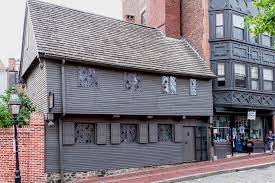
Lorri: It’s hard to choose, but Paul Revere’s home has been a favorite of mine, along with the brownstone houses of the Back Bay area. The gold dome of Beacon Hill was built to represent “A shining city on a hill” based on Matthew 5:14-16.

LM: What are your passions outside of writing?

Lorri: I dabble a bit in art and set design. I used to teach art at Metrowest Christian Academy in Ashland but left to pursue writing. Now, I appease my art urges by creating VBS (Vacation Bible School) sets for my church. When I find the time, I particularly love painting portraits and have always admired artist Mary Cassatt. I hope to further live out my love of art through my next heroine, who strives to become a famous portrait artist, working in oils during a time when women were expected to only dabble in watercolor landscapes.

LM: Book two in the series, The Merchant’s Yield comes out in April. What are you working on now?

Lorri: Besides being in various stages of editing of book two, The Merchant’s Yield, and book three, The Sugar Baron’s Ring, I’m now researching and plotting a Boston Brahmin series. The setting takes place during a prosperous, antebellum period for Boston between the Revolutionary War and Civil War when Bostonians pioneered maritime, textile, and railroad commerce. Wealthy family ties conjured elite factions who invested in the humanities, arts, and sciences, but also created rising social tensions between the poor and Boston’s aristocracy.

LM: What else do you want folks to know about you?

Lorri: I have three teenage boys who are amazing young men and a wonderfully supportive husband, but all the wrestling, football, lacrosse, and tough-guy testosterone led me to seek a girlie outlet in writing romance. I’m a tea fanatic, even though my husband is working hard to convert me to coffee, and our local grocery store loves me because I buy at least seven gallons of milk a week for my boys to guzzle down.

Why I write...

I believe readers should be led on a heart journey. Romance should allow for an escape from everyday life. It should also lead us to a better understanding of the human condition and how God views us. I believe readers, like the heroines and heroes of stories, are not static creatures and can discover different aspects of themselves through empathizing with characters' comical mishaps and dramatic misunderstandings. I believe romance novels can depict a fallible human heart that can be made whole again by a merciful creator and remind us of the hope for the same.


Linda: Where can folks find you on the web?

Lorri: 
Bookbub: https://www.bookbub.com/books/the-duke-s-refuge-the-leeward-island-series-book-1-by-lorri-dudley