Showing posts with label Traveling Tuesday. Show all posts

Tuesday, August 22, 2023

Traveling Tuesday: Wyoming in the 1870s

Traveling Tuesday: Wyoming in the 1870s


By the time Wyoming attained statehood in 1890, the population was over sixty thousand, however, when my character Beryl shows up in 1875, there were a mere nine thousand inhabitants in an area larger than the United Kingdom where she’d come from. The transcontinental railroad had been completed six years earlier, and the Union Pacific portion of the line cut through the southern section of the territory on its way to California, creating many towns along the route.

However, prior to that Wyoming owed much of its early settlement to the “gentlemen of Europe.” A fondness for beaver top hats created an industry that sent fur trappers such as Kit Carson, Jim Bridger, and Jedediah Smith into the Rocky Mountains in search of the prized pelts. After the Homestead Act of 1862, the number of people entering the area swelled, seeing a peak in immigration in 1868. Wyoming Territory was officially created on July 25th of that year. Four years later, Yellowstone National Park became the world’s first national park.

By the time Beryl arrived, the cattle industry boom and the era of the cowboy were in full swing.
Pixabay/
B Snuffleupagus
Demand for beef had grown on both sides of the Atlantic, and the invention of refrigerated rail cars and ships supported the growth. Territorial governors invested, and one of the most powerful political organizations in the West at that time, the Wyoming Stock Growers Association, had been founded four years earlier. More than one resource called the WSGA “the de facto territorial government” in Wyoming.

Being from England herself, Beryl might have noticed that the population was heavily foreign-born, one site claiming as much as three-eighths of the inhabitants. Most came from Ireland, Germany, and England. Unlike Colorado, Wyoming never experienced any major mineral discoveries such as gold or silver. However, there were many places to hide, and the territory was home to more than a few outlaw gangs. The nickname “wild west” became popular for a reason, and Beryl was soon caught up in one of its nefarious plots.

__________________________

Beryl’s Bounty Hunter

Can a thief and a lawman find happiness?


Orphaned as a child, Beryl Atherton has lived on the streets of London as long as she can remember. Reduced to stealing for survival, she is arrested. During her incarceration one of her cellmates shows her a newspaper ad for an American mail-order bride agency. But all is not as it seems, and moments after landing in Boston, she must run for her life. Will things be no different for her in the New World?

Working as a bounty hunter since The War Between the States, Lucas Wolf just needs a few more cases before he can hang up his gun, purchase a ranch out West, and apply for a mail-order bride from the Westward Home & Hearts Mail-Order Bride Agency. While staking out the docks in Boston, he sees a woman fleeing from the man he’s been tailing. Saving her risks his job. Not saving her risks his heart.

Pre-order Link: https://amzn.to/3KqprHW

Tuesday, January 24, 2023

Traveling Tuesday: They Came, They Sawed, They Left

Traveling Tuesday: They Came, They Sawed, They Left

Pixabay/David Mark
Eighty-five years ago, known as the Long Island Express, one of the most destructive storms to strike Long Island, New York and New England caused approximately $306 million ($4.7 billion in 2017 dollars) in damage and property loss and killed 682 people. Starting out near the coast of Africa, it swelled to a Category 5, then hit land as a Category 3 or 4 hurricane (sources differ) rivaling such storms as Hugo, Harvey, Frederic, and Grace. Unfortunately for residents in the hurricane’s path, forecasters weren’t convinced the storm would amount to much more than rain and “heavy winds” so gave no warnings.

New England forests were decimated with more than 2.7 billion board feet falling which created an extreme fire hazard. In addition, without being salvaged the timber would rot and become worthless. Called upon to handle the destruction, the US Forest Service created the Northeastern Timber Salvage Administration. The Administration secured a loan from the Disaster Loan Corporation in the amount of $16,269,300.

Doing no logging itself, the NETSA paid owners after they delivered salvaged material. In an effort to prevent problems in the timber market, the Forest Service established log grades and prices, purchased and stored logs, sawed or contracted for sawing, and channeled the lumber into the market. Employees of the Civilian Conservations Corps and the Works Projects Administration took care of the hazard reduction work.

In the outskirts of Concord, New Hampshire, the Turkey Pond Sawmill was run by the Durant Family.
Pixabay/
Robert Gabriel
Located near much of the forest damage, the sawmill became a storage site for the downed timber – almost twelve million board feet of white pine logs. By now, it was 1941, and labor was difficult to come by as a result of America’s entry into World War II. As a result, the Forest Service did the unthinkable: they opened a sawmill on the northern end of Turkey Pond and hired women to do the work.

And work they did. According to one Forest Service manager, “Snow, rain, or sub-zero weather never slowed them up.” NETSA director John Campbell reported in 1942, “The female mill at Turkey Pond is going along nicely. It’s most surprising and gratifying to see the way those gals take hold of the job. In addition to the jobs we anticipated women could handle, we have found them capable of rolling logs on the deck, running the edger and for ‘show purposes’ even running the head saw.”

The mill operated for two years with a starting wage of $4.00 a day (significant when a waitress made about $1.40 a day and retail clerks earned about $1.80). Also, significant is that the wage was the equivalent of men’s wages.

Pixabay/James DeMers

Florence Drouin Blake was 15 years old when she went to work at Turkey Pond. “For me, it was about being all grown up and working with a bunch of women that were older than I was. They were all good gals. They helped me, and I helped them.” Despite being one of the youngest girls in the group, she had experience. She’d been cutting wood since age thirteen when her father gave her an ax for Christmas.

On November 23, 1943, the last logs were sawed, five years after being delivered.

Think you could have done the work?

__________________

Estelle's Endeavor

Will a world at war destroy a second chance at love?


Estelle Johnson promised to wait for Aubry DeLuca, but then she receives word of his debilitating injuries. Does she have the strength to stand by him in his hour of need?

Aubry DeLuca storms the beaches at Normandy, then wakes up in the hospital, his eyes bandaged. Will he regain his sight? Will the only woman he’s ever loved welcome him home or is he destined to go through life blind and alone?

Purchase Link: https://amzn.to/3PW0q95

Tuesday, November 15, 2022

Traveling Tuesday: Camp David

Traveling Tuesday: Camp David

Photo: archives.gov
Everyone needs a vacation, even a nation’s leader. So, where does the president of the United States go when he needs a break? Since 1942…a 125-acre compound located about sixty miles from Washington, DC near the towns of Thurmont and Emmitsburg in the beautiful Catoctin Mountains of Maryland. Catoctin Mountain Park (a National Park) doesn’t show the location of Camp David on park maps for privacy and security reasons, but it can be seen on publicly accessible satellite images. The helicopter ride takes approximately thirty minutes from the White House.

Built as a camp for federal employees and their families, the project was completed in 1938 through the Works Progress Administration (WPA) during the New Deal. Originally named Hi-Catoctin, it was renamed Shangri-La by President Franklin Roosevelt (after the fictional Himalayan paradise in James Hilton’s 1933 novel Lost Horizon. President Eisenhower renamed it Camp David in honor of his father and grandson. The move angered some members of the Democratic party, and Representative Michael Kirwan of Ohio stating that renaming the camp “was the only thing the Eisenhower Administration accomplished without Democratic help.” After Eisenhower left office, there was talk of reverting the name to Shangri-La, but President Kennedy vetoed the idea, and Camp David it remained. Officially, however, it is the Naval Support Facility Thurmont.

If not for World War II, Camp David may not have become a presidential getaway. President Roosevelt typically used the presidential yacht, the USS Potomac, for relaxation. But when the U.S. entered the war, military and Secret Service leadership were concerned about FDR’s safety on the open waters of the Atlantic Ocean because of threats of German U-boats. As a result, the president asked the National Park Service to suggest possible sites within one hundred miles of Washington. There are no reports as to whether Hi-Catoctin was the only recommendation or if it was chosen after visiting numerous sites.

The President’s cabin, which sits on top of a hill, features several bedrooms, a small office, a kitchen, several fireplaces, and a large outdoor flagstone patio. There is also a swimming pool, hot tub, and single golf hole with multiple tees. (Eisenhower added a 250-yard driving range near the helicopter pad.

Paths wind through the property connecting the twelve guest cottages. Laurel Lodge is the main cabin
Photo: archives.gov
where meals are served and meetings are conducted. There are three conference rooms and a presidential office. Hickory Lodge holds a bowling alley, movie theater, restaurant/bar, game room, library, and gift shop. Tennis courts, horseshoe pits, a fitness room, and a skeet range are supplemented with nearby fishing and horseback riding. Trails are perfect for walking, biking, snowshoeing, or cross-country skiing. The hills are used for sledding and snowmobiling. Evergreen Chapel is a non-denominational place of worship. Golf carts are used as the primary means of transportation.

Because it is technically a military installation, staffing is primarily provided by the Seabees, Civil Engineer Corps, U.S. Navy, and U.S. Marines. Renovations are handled by naval construction battalions.

Photo: archives.gov
 In addition to using the facility for R&R, presidents have hosted foreign dignitaries such as British prime minister Sir Winston Churchill, Russian premier Nikita Khrushchev, Australian prime minister Harold Holt, Canadian prime minister Lester Pearson, Indonesian president Suharto, French president Charles De Gaulle, Mexican president Lopez Mateos, Columbian president Alberto Lleras, Egyptian president Anwar Sadat, Israeli prime minister Menachem Begin, and British prime minister Margaret Thatcher.

Camp David’s use as a casual meeting place for world leaders is noteworthy, but the facility is most appreciated by presidents for its ability to provide escape from the daily pressures. Said President Reagan, “As president, the days I hated most were those of nonstop meetings, one after another, with no time in between to collect my thoughts…the days I liked best were those Fridays when I could break away a little early, about three or three-thirty, and take off for Camp David.

_______________

Estelle's Endeavor 

Will a world at war destroy a second chance at love?


Estelle Johnson promised to wait for Aubry DeLuca, but then she receives word of his debilitating injuries. Does she have the strength to stand by him in his hour of need?

Aubry DeLuca storms the beaches at Normandy, then wakes up in the hospital, his eyes bandaged. Will he regain his sight? Will the only woman he’s ever loved welcome him home or is he destined to go through life blind and alone?

Purchase Link: https://amzn.to/3TNRrHP

Wednesday, November 2, 2022

Traveling Tuesday: Westward Expansion

Traveling Tuesday: Westward Expansion

American Progress, 1872
by John Gast
The move into the American West began around 1810, about seven years after President Thomas Jefferson purchased the territory of Louisiana from the French government for $15 million. Nearly doubling the size of the United States, the area stretched from the Mississippi River to the Rocky Mountains and from Canada to New Orleans. Jefferson keenly believed that the health of the republic depended on the independence of its citizens, and that land ownership was a key to that independence. He wrote, “Those who labor in the earth are the chosen people of God.”

By 1840, almost forty percent of the U.S. population (about seven million people), lived in the trans-Appalachian West. Using the trail blazed by Lewis and Clark, these people sold most of their worldly goods to purchase a wagon, a pair of oxen, and enough food (hopefully) to get them across the country. Most were searching for economic opportunity, but many were looking for adventure.

Americans weren’t the only people to trek the trails. Europeans came in droves, and the reasons are as
Courtesy National Geographic
numerous as the people themselves. Like the Americans, some hoped to earn a living. Others fled religious or political persecution. Still more were escaping starvation (such as when the Irish came between 1845 to 1849 because of The Great Famine). The California Gold Rush and subsequent Alaskan Gold Rush also brought thousands of people.

In 1845, journalist John O’Sullivan espoused that westward migration was “Americans’ manifest destiny to carry the great experiment of liberty to the edge of the continent: to overspread and to possess the whole of the [land] which Providence has given us.” He may have coined the phrase, but it was a belief long held within the U.S.

The Preemption Act of 1841, The Donation Land Act of 1850, and the Homestead Act of 1862 enticed spurts of mass immigration. There were two wagon-based transportation networks, one starting in Missouri, the other in the Mexican province of Santa Fe de Nuevo Mexico. Known as the Emigrant Trails, the Oregon, Mormon, and California trails began in Missouri, and historians have estimated that at least a half-million people traversed these three trails between 1843 and 1869 (the height of expansion). The Gila Trail, Sante Fe Trail, and Old Spanish Trail were the “southern routes.”


No matter what trail was used, the journey was arduous and slow and fraught with dangers. Infectious diseases, dehydration, malnutrition, injury, and inclement weather caused the deaths of as many as one in ten travelers. Most settlers paid to be led by a wagon master who was in charge of a large party or “train” of up to several hundred wagons. Some of these masters wrote trail guides or memoirs, and it wasn’t until 1859, the government published The Prairie Traveler, written by Capt. Randolph Marcy who'd spent most of his career in the American West.

Competition among the territories was fierce, and some offered “incentives” to lure settlers, such as Wyoming which was the first state to give women the right to vote. Once the journey was complete, the danger wasn’t necessarily over, but immigrants built “soddies,” homes made of dirt and grass, then set about carving a living out of the plentiful and fertile land of the West.
______________

Dinah's Dilemma

Will she have to run from the past for the rest of her life?


Dinah Simpkins has no chance of making a good marriage. Her outlaw brothers and her father’s gambling addiction have ruined the family’s reputation. Then the Westward Home and Hearts Matrimonial Agency provides an opportunity for a fresh start. After Dinah arrives in Nebraska, she discovers her brothers played a part in the death of her prospective groom’s first wife.

As a former Pinkerton detective Nathan Childs knows when someone is lying. The bride sent by the matrimonial agency may be beautiful, but she’s definitely hiding something, and he has no intention of marrying her until he uncovers the truth. But an easier solution may be to send her packing. Then his young daughter goes missing. He and Dinah must put aside their mutual hurt and mistrust to find her.

Purchase Link: https://amzn.to/3TrdXqc

Tuesday, October 18, 2022

Traveling Tuesday: Norway During WWII

Traveling Tuesday: Norway During WWII

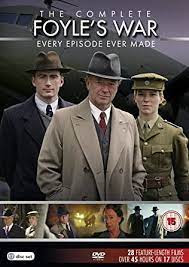
One of my favorite television shows (long off the air) is Foyle’s War, a British production that features a Detective Chief Inspector who is stationed in Hastings and is itching to do something for the war effort. He constantly asks to be transferred into one of the armed forces, but because he sheds the light on corruption, negligence, and poor performance by his superiors, his request is never granted. He meets soldier Paul Milner who is in the hospital because of losing a leg at the Battle of Trondheim.

Much has been written about Europe during the war, but the “outlying” countries are often overlooked. Located on the western and northernmost part of the Scandinavian Peninsula, Norway is the northernmost of the Nordic countries. The nation is bordered by Sweden, Finland, and Russia, and its coastline is broken by huge fjords and thousands of islands. Norway’s history reaches back thousands of years with evidence of human occupation as early as 11,000 BC.

During World War II, Norway declared itself neutral in 1939, but the country’s strategic importance to
Courtesy WorldAtlas.com
both sides of the conflict brought it to the forefront of hostilities. Iron ore from Sweden, upon which Germany depended, was exported through the Norwegian port of Narvik. This route was especially crucial because most of the Baltic Sea froze over during the winter. Controlling Norway would also be a strategic asset in the Battle of the Atlantic.

As one site put it: “On the night of April 8, 1940, the people of Trondheim went to bed as citizens of a peaceful city in an independent land. When they awoke next morning, the heavy cruiser “Hipper” and four destroyers were anchored in the harbor and seventeen hundred German troops occupied the city.” The resulting German control of the ports and airfields was a constant threat to Allied supply routes.

Life in occupied Norway was difficult and lasted through the duration of the war, until VE days was announced in May, 1945. A pro-war German government named “Den nasjonale regiering (The National Government) rule Norway as King Haakon VII and his cabinet escaped to London where they formed a government-in-exile. Civil rule was assumed by the Reichskommissariat Norwegen (Reich Commissariat of Norway), which acted in collaboration with the pro-German puppet government.

Pixabay/Michelle Raponi
Norway lost all its major trading partners, with Germany becoming the main, possibly only, trading partner. Even though production capacity remained intact, the authorities confiscated a high percentage of the output, leaving Norway with only 43% of its production available to the population. A scarcity of commodities prompted most Norwegians to grow their own crops and keep livestock. Cities parceled out plots in parks to grow potatoes, cabbage, and other vegetables suitable to the climate. Fishing and hunting became more widespread.

There was not a large population of Jews in Norway; most reports indicate a number just over two thousand, but almost immediately arrests and executions began resulting in the death of at least 765 people, (35%). Fortunately, some were able to flee the country, mostly to Sweden, but a few managed to get to Britain.

Resistance to the occupation consisted of a home front group (Hiemmefronten) and an external group
WikiImages
(Utefronten). Organized and armed, the overarching movement was known as Milorg and is said to have around 40,000 members. The Hiemmefronten performed sabotage, raids, clandestine operations, and gathered intelligence. One of the most successful actions was the Norwegian Heavy Water Sabotage that decimated the German nuclear energy project. The organization played a large part in the transfer of power after the end of the war.

________________

Will a world at war destroy a second chance at love?


Estelle Johnson promised to wait for Aubry DeLuca, but then she receives word of his debilitating injuries. Does she have the strength to stand by him in his hour of need?

Aubry DeLuca storms the beaches at Normandy, then wakes up in the hospital, his eyes bandaged. Will he regain his sight? Will the only woman he’s ever loved welcome him home or is he destined to go through life blind and alone?

Purchase Link: https://amzn.to/3SuXWPI

Tuesday, August 30, 2022

Traveling Tuesday: Walter Reed Hospital

Traveling Tuesday: Walter Reed Hospital

In my upcoming release, Estelle’s Endeavor, my male protagonist is sent to Walter Reed General Hospital for further care after he is injured during the invasion at Normandy during WWII. I drove past the hospital during my commute in the early days of my career but rarely gave it any thought. Living in the Washington, DC/suburban Maryland area, one tends to get used to the various government facilities and installations that dot the landscape. During my research for the story, I turned up many interesting facts, especially about the hospital’s namesake.

As far back as George Washington’s era, the army medical staff realized the need for a separate military hospital campus (or reservation as one source called it), but the dream would not become reality until after the Civil War. The Washington Arsenal, located on a peninsula where the Potomac Anacostia Rivers merge, was the site of a small hospital from 1898 to 1909. It is said that Dr. Walter Reed was assigned to the Arsenal as camp surgeon from 1881 to 1882.

Reed was brilliant by all reports. He finished his two-year program in one year and received his degree at seventeen years of age from the University of Virginia in 1869. He then moved to New York where he received his second degree from Bellevue Hospital Medical College and went on to work at several hospitals within the city.

After marrying, he decided that joining the army would give him a steady income and allow him to
travel. He was commissioned as a first lieutenant assistant surgeon, and for several years he and his wife moved around the country for his assignments. At one point, he was stationed at Fort McHenry, and he took the opportunity to attend classes at Johns Hopkins University.

Bacteriology, infectious diseases, and the concept of germs was in the forefront of the study in medicine during the 1880s and early 1890s, and Reed began research into the cause of typhoid and yellow fever. His studies were breakthroughs in many ways. Not only did he disprove the theory that the diseases were spread through the air, but he was also able to prove mosquitos as the carriers. Additionally, his study was the first time test subjects signed consent forms.

In 1902, Reed died from peritonitis after an emergency appendectomy, and his friend and fellow physician Lt. Colonel William Borden was the driving force to get Congressional support to create a true medical center. It took several years, but funds were finally appropriated in the amount of $192,000, and the new facility welcomed its first ten patients on May 1, 1902. Capacity at that time was eighty beds, and the facility has grown to 5,500 rooms on nearly thirty acres.

Since its inception, Walter Reed has served more than 150,000 active and retired personnel from all branches of the military. Some of its more famous patients include Major General William Donovan (founder of the OSS), John Foster Dulles (Secretary of State), General Dwight D. Eisenhower (President of the United States), Mamie Eisenhower (First Lady), General John Pershing (Commander, U.S. Expeditionary Forces WWI), and General Douglas MacArthur (US Army Chief of Staff).

_______________________

Estelle's Endeavor 

Will a world at war destroy a second chance at love?


Estelle Johnson promised to wait for Aubry DeLuca, but then she receives word of his debilitating injuries. Does she have the strength to stand by him in his hour of need?

Aubry DeLuca storms the beaches at Normandy, then wakes up in the hospital, his eyes bandaged. Will he regain his sight? Will the only woman he’s ever loved welcome him home or is he destined to go through life blind and alone?

Pre-order link: https://amzn.to/3JlKBWe

Tuesday, August 23, 2022

Traveling Tuesday: Baltimore During WWII

Traveling Tuesday: Baltimore During WWII

The history of Baltimore begins nearly three hundred years ago, its residents living through economic booms and busts, social and political upheaval, fire, and war, the last of which was a mixed blessing for the city.

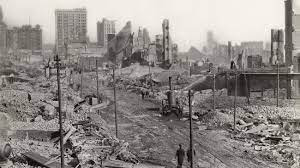
A mere three decades prior to World War II Baltimore suffered a massive fire. At the corner of German (now Redwood) and Liberty Streets smoke rose from the basement of a dry goods store, then shortly before eleven o’clock in the morning, the building exploded. Burning debris landed on nearby structures, and the winds fanned the flames, pushing them even farther until the entire downtown area was ablaze. Thirty hours later, Baltimore firemen and those who had arrived from other cities along the East Coast put out the fire that had consumed 140 acres, destroyed 1,526 buildings, and burned out 2,500 companies. It would take the city ten years to fully rebuild.

World War I, also known as The Great War, brought economic and social changes. Manufacturing
plants sprang up or expanded creating jobs and supporting the war effort. Anti-German sentiment brought name changes to streets and businesses (German Street became Redwood Street, and German-American Bank became American Bank). Unfortunately, twelve years after the war ended, the Depression would nearly devastate the city. Baltimore Trust Company closed its thirty-two-story skyscraper, and by 1933, the governor closed all the banks to prevent mass withdrawals. By 1934, almost 30,000 residents were unemployed. Federal resources such as the Civil Works Administration and the Works Progress Administration helped, but it took the second world war to bring Baltimore back to its former glory.

Two of the largest government contractors were the Glenn L. Martin plant that produced military aircraft such as the B-26 Marauder and the Bethlehem-Fairfield shipyard which built Liberty ships and had the honor of launching the first, the SS Patrick Henry. Camp Holabird is where the army tested the world-famous jeep and trained the soldiers who would keep those jeeps and other military vehicles operating. Coast Guard sailors trained at Fort McHenry and Curtis Bay. And thousands of men and women would go overseas to fight the enemy in every theatre of war.

Like everywhere else in the nation, residents planted victory gardens, but Baltimore went one step further when Henry P. Irr, president of Baltimore Federal Savings and Loan, sponsored a statewide competition and offered bonds as prizes. Constance Black, wife of Baltimore Sun executive Harry Black, tilled a section behind their mansion and put in boysenberries, currants, cabbage, chard, and fruit trees. Apparently, not to be outdone, her husband rode to work in a horse and carriage.

By all reports, Baltimore became a twenty-four-hour city. Manufacturers operated three shifts, and many support businesses extended their hours. Housing became a major issue as people flooded the city to work at the various plants. Many houses were cut up into small apartments, and some rowhouses were fitted with multiple beds, each bed shared among three men, one per eight-hour shift. Unfortunately, the city was not a welcoming place for people of color, and segregated housing was poor at best. According to one source, Baltimore refused federal money to build permanent public housing for African Americans, instead “opting for temporary trailers so they can be easily moved out after the war is over.”

Since the war, Baltimore has continued to experience the ebb and flow of success and failure, growth and stagnation, stability and unrest, but as shown in her history, the city and her people will prevail.

__________________

Estelle's Endeavor

Will a world at war destroy a second chance at love?

Estelle Johnson promised to wait for Aubry DeLuca, but then she receives word of his debilitating injuries. Does she have the strength to stand by him in his hour of need?

Aubry DeLuca storms the beaches at Normandy, then wakes up in the hospital, his eyes bandaged. Will he regain his sight? Will the only woman he’s ever loved welcome him home or is he destined to go through life blind and alone?

Pre-order link: https://amzn.to/3zk40Ci

Tuesday, August 9, 2022

Traveling Tuesday: Colorado

 Traveling Tuesday: Colorado


“Denver is a beautiful city of some 75,000 inhabitants, built mostly of stone and brick. It contains the usual amount of fine buildings. One, in particular, we are lead (sic) to observe, and that Tabor’s Opera House, the largest in the world, excepting one in Paris, France. This building cost $850,000. The County Court House occupies an entire block, with buildings and ground. There are two large smelting works here.” 
(Sue A. Sanders, California as I Saw It: First Person Narratives of California’s Early Years, 1849-1900)

The Tabor Opera House was constructed in just one hundred days in 1879 by mining magnate Horace Tabor. Located in Leadville, Colorado the man and his wife brought culture and arts to one of the rowdiest silver boomtowns.

Colorado came about as the result of three events: the purchase of the eastern part in 1803 as part of the Louisiana Purchase, the western portion in 1848 through the Treaty of Guadalupe Hidalgo, and the purchase of a Texas claim in 1850. Settlers trickled in, but the Native Americans were the largest population, mostly made up of Arapaho, Cheyenne, and Ute peoples.

Then gold was discovered in 1858, and life changed. Reporter Horace Greeley announced the find in
the New York Tribune, and prospectors surged into the territory at the rate of 5,000 per week. The Natives were pushed further and further west, and as it became apparent there were millions of dollars to be had, companies arrived to make their fortune. On February 28, 1861, the Territory of Colorado was organized. Fifteen years later, it was admitted to the union as the State of Colorado.

The silver rush started in 1879, and once again miners poured into the area to find their fortune. Railroad lines began to crisscross the state bringing in even more travelers and settlers. Other minerals were discovered such as molybdenum and zinc which would later be used to help the WWII war effort. A picture taken in the late 1940s by Farm Security Administration photographer Russell Lee shows that the mountain streams continued to run yellow because of the tailings from the gold mills.

Pixabay/BeverlyLussier
At over 100,000 square miles, Colorado is larger than England and Belgium as well as many other European countries. The terrain is mixed encompassing most of the Southern Rocky Mountains, the northeastern portion of the Colorado Plateau, and the western edge of the Great Plains.


_______________

Gold Rush Bride Caroline (ON SALE!)

She thinks he’s high-handed and out for her gold. He thinks she’s difficult and money-hungry. Will they discover that love is the true treasure?


Scarred in a childhood accident, Caroline Vogel has yet to find a man willing to marry her, so she heads to the Pike’s Peak goldfields to pan enough ore to become a woman of means. When she and the handsome assistant trail boss hit it off, she begins to hope her future may not be spent alone. Then she catches wind of dark secrets from the man’s past, and she’s not sure what or who to believe.

Orphaned as a teenager, Oliver Llewellyn stole to survive, then used his skills for the army during the war. Nowadays, he applies his knowledge to catch dangerous thieves for the Pinkerton Agency, so guarding a young woman during a wagon train journey should be easy. But he didn’t count on the fact she’d angered a man bent on revenge. He also didn’t count on losing his heart.

Purchase Link:  https://amzn.to/3bf3xZU

Tuesday, June 28, 2022

Traveling Tuesday: London’s Broadcasting House and WWII

Traveling Tuesday: 
London’s Broadcasting House and WWII 

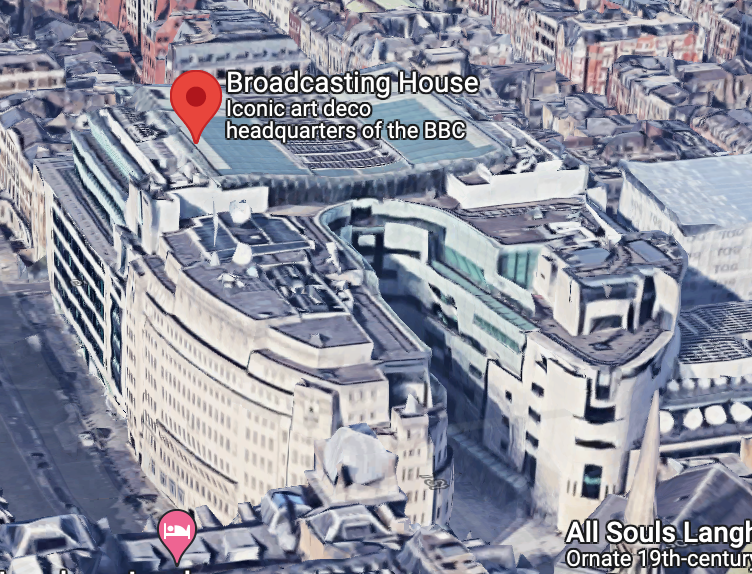
Ruth Brown, the protagonist in my Ruth Brown Mystery series, is a war correspondent during World War II. After arriving in London, she joins the hundreds of journalists from around the world in using the facilities at BBC’s Broadcasting House to write up and transmit her articles. The Art Deco structure, constructed between 1928-1932, is the organization’s first purpose-built home for radio broadcasting. 

Art Deco is defined as combining “modern styles with fine craftsmanship and rich materials. Featuring rare and expensive materials such as ebony and ivory, the style was influenced by the bold geometric forms of Cubism, the bright colors of Fauvism, the updated craftsmanship of the furniture from the eras of Louis Philip I and Louis XVI, and the exotic styles of China, Japan, India, Egypt, and Maya. 

Described by many as appearing like a ship because of the accentuated front section bearing a clock tower and aerial mast, the building is located in Portland Place and Langham Place. Nine floors tower above the street, and three floors are underground. Architect George Val Myer in collaborated with civil engineer M.T. Tudsbery to design the structure that is asymmetrical because of complaints from residents on Langham Street that the building would cast shadows on their homes cutting off natural light. The front of the structure features statues of Prospero and Ariel from Shakespeare’s The Tempest with several others of Ariel around the sides. In the foyer, a statue of “The Sower” greets staff and guests. 

When built, Broadcasting House contained twenty-two radio stations, but during WWII opened its door to British and foreign war correspondents. Unfortunately, for journalists stationed there, the building was bombed twice during the Blitz, experiencing heavy damage, several deaths, and many injuries. 

Photo: Courtesy of BBC
The first bombing occurred on October 15, 1940 and was heard live on air by listeners who had tuned in for the nine o’clock news, that night read by broadcaster Bruce Belfrage. The 225 kg (496 pounds) bomb exploded at exactly one minute and fifty seconds past the hour, but it had actually landed earlier that same evening. The level of noise and other explosions prevented anyone from realizing the device hadn’t detonated. After it was found by the defense staff, they began to evacuate the building. 

Photo: Pixabay/
Jorge Guillen
Following the incident, nearby residents made a formal complaint to the BBC that the structure was easy to sight from the sky and was being targeted by the Germans. Executive staff decided to “tone down” the building with camouflage paint, and within a month the job was complete. However, it seemed to have little effect. Just after ten o’clock in the evening on Sunday, December 8, 1940, a landmine floated down outside the entrance and exploded. There were fewer casualties but the damage was more severe than the first bombing. Afterward, the area was reinforced with a pillbox and concrete apron. During this time, a secret bomb-proof bunker was created, allowing the studios to stay on air even in the most devastating attack. 

Despite bombs falling nearby on two other occasions, Broadcasting House suffered no more damage, however, Overseas Services division and some of the domestic staff moved to temporary studios on Oxford Street. BBC Radio continued to broadcast from the roof, even during air raids.

 __________________ 

Under Fire


Set in April 1942, Under Fire, the first book in the Ruth Brown Mystery Series, tells the story of Ruth Brown whose missing sister jane is declared dead. Convinced her sister is still alive, Ruth follows clues from her small New Hampshire town to war-torn London trying to find her. Discovering that Jane has been murdered results in a faith crisis for Ruth, and she decides she must find Jane’s killer. During her search for the culprit, she runs into smugglers, resistance fighters, and the IRA, all of whom want her dead for what she knows.

Tuesday, May 17, 2022

Traveling Tuesday: German Resistance

Traveling Tuesday: German Resistance 

Photo: Pixabay/
Brigette Werner
Talking about the German WWII home front is tricky. Even after almost eighty years, the topic can produce strong emotions and opinions. But the bottom line is that the German people suffered, and many of them felt “sucker punched” by Hitler and the ensuing conflict. 

It can be difficult to imagine how Hitler made it into power, but one must study the surrounding circumstances. The German people were humiliated after The Great War (now WWI). They had been dragged into a war they didn’t want, and were embarrassed by the outcome. They were told they couldn’t build a military which made them feel defenseless. Millions of families had lost sons, fathers, brothers, and other relatives. Inflation was so bad that a wheelbarrow full of Reichsmarks wouldn’t buy a loaf of bread, and unemployment was at an all-time high. 

Rather than the two-party system common in the United States, there were multiple parties pushing their agendas in the decade and a half before WWII. Most touted their ability to solve the public’s financial troubles and rebuild the nation into a country its citizens could be proud of. Because of the number of parties in the election, the vote was splintered, meaning that a “majority” win by a particular party wasn’t truly a majority - they simply came out on top with the most votes. 

Like him or hate him, Hitler was a charismatic speaker, and he toured the country far and wide before the election, rallying the people to his party’s rhetoric. Knowing that food shortages had destroyed civilian morale and disorders and riots were factors in the Kaiser’s abdication, Hitler sought to convince the German people that should his party be elected, life would improve a hundred-fold. He even claimed he had no desire to go to war again, although anyone who’d studied his book, Mein Kampf, would have known differently. 

Once elected, Hitler stressed the successes of his party to regain the Saarland, remilitarizing the Rhineland, uniting with Austria, and reclaiming the Sudetenland. By 1939, he knew he could begin to execute his plans to take Germany into war and contrived a story that allowed him to attack Poland, setting off a war that would absorb nearly every country on earth. 

What many people don’t realize is that there was German resistance to Hitler and his nefarious plans. A group of young people known as the Edelweiss Pirates attacked members of Hitler Youth and sang anti-Nazi songs. They also managed to kill a Nazi chief. Nearly 800 of these youth were arrested and twelve were publicly hanged as a result. Another group, called The White Rose published anti-Nazi leaflets and protested at Nazi events. Wing Youth and Jazz Youth groups were formed as well. Adults also protested, hid Jew and other “undesirables,” and helped downed airmen to escape. Opposition also came from the church leaders such as Martin Bormann and Dietrich Bonhoeffer, and interestingly, Hitler allowed them to denounce his activities until well into the war. 

Photo: WikiImages
There were two efforts to remove Hitler during the war. After plans were drawn up to attack France, Admiral Canaris staged a coup because he thought the attack would fail. Instead support for the plan fizzled, and Hitler remained in power. In July 1944, a group of Army officers tried to assassinate Hitler and replace him with a government led by General Beck. The bomb did not kill Hitler, and those involved were executed immediately. Field Marshal Erwin von Rommel was accused of being associated with the assassination attempt and forced to commit suicide as punishment. It would not be until May 1945 that Hitler would realize his Thousand-Year Reich would not come to fruition and killed himself.

________________


About Love's Belief

Midwife Pia Hertz and her mother Sabine have been delivering babies long before the Nazis came to power. Now, the Third Reich has implemented mandates that require Jewish babies and other “undesirables” to be killed as part of The Final Solution. Is Pia’s new faith in Christ strong enough to defy the laws of man?

Despite the agony of the injury at the Battle of Drøbak Sound that took his arm, Dieter Fertig is relieved he’s no longer part of Hitler’s army. He returns to Berlin and discovers Jews are being deported by the thousands. When he realizes the Nuremburg Laws require his best friend’s baby girl to be killed, he must find a way to spirit the child out of Germany before the Nazis discover her existence. 

Inspired by the biblical story of Shiprah and Puah, the midwives who saved Jewish babies during Pharaoh’s reign, Love’s Belief shows how one person’s actions can change the world.

Tuesday, April 26, 2022

Traveling Tuesday: Travel During WWII

Traveling Tuesday: Travel During WWII 

Photo: Pixabay/
Rene Rauschenberger
Until March 2020, when that-which-shall-not-be-named occurred, most people traveled without a second thought. For the most part, airfare and gasoline were affordable, so folks took regular vacations to visit family or simply get away, perhaps going somewhere they’d never been or return to a favorite location. Then lockdown happened, and travel came to a screeching halt. Now allowed with certain mandates and policies attached, trips are no longer the easy excursions they once were. 

Perhaps this has given us some appreciation for travel (and the severe shortage thereof) during World War II. 

Passenger air service continued during the war, but was primarily used for the war effort: either troop transport or civilian travel on defense industry business. The commercial airlines were pressed into military service, so they only way you could travel by air was to receive permission by the military or federal government. The naval situation was much the same with oceanic travel only done by the military (to say nothing of the danger of taking a ship across enemy-filled waters.) 

Photo: Pixabay/
Siggy Nowak
Train travel was available to civilians, but crowded with military personnel who took priority, so it was often difficult to get a seat. There was large-scale migration to industrial centers as people took jobs in the defense industry, and many women followed their husbands to military camp. 

Travel by car was limited by gasoline rationing, so people carpooled or took public transportation (buses or local trains) which again were severely overcrowded. However, drivers who used their cars for work deemed essential for the war effort were classified differently and received additional stamps. Others were limited as follows: 
  • Class A: Three gallons per week 
  • Class B (factory workers, traveling salesmen): Eight gallons per week 
  • Class C (essential war workers, police, doctors, letter carriers) 
  • Class D: Motorcycles 
  • Class T: Truckers 
  • Class X: Politicians and other “important people”
Photo: Pixabay/Cindy Jones
Coupled with the long hours that people worked (often six days a week doing defense work) they generally limited vacation and long-distance travel. In an interesting aside, major league baseball was incredibly popular, and a special letter from President Roosevelt, known as the “Green Light Letter,” approved continuation of the sport, but a directive from the Office of Defense Transportation ordered that all spring training take place north of the Potomac River and east of the Mississippi River to cut down on travel. 

Do you still take travel for granted or has that changed? 

_________________________

Spies & Sweethearts

She wants to do her part. He’s just trying to stay out of the stockade. Will two agents deep behind enemy lines find capture… or love? 

1942. Emily Strealer is tired of being told what she can’t do. Wanting to prove herself to her older sisters and do her part for the war effort, the high school French teacher joins the OSS and trains to become a covert operative. And when she completes her training, she finds herself parachuting into occupied France with her instructor to send radio signals to the Resistance. 

Major Gerard Lucas has always been a rogue. Transferring to the so-called “Office of Dirty Tricks” to escape a court-martial, he poses as a husband to one of his trainees on a dangerous secret mission. But when their cover is blown after only three weeks, he has to flee with the young schoolteacher to avoid Nazi arrest. 

Running for their lives, Emily clings to her mentor’s military experience during the harrowing three-hundred-mile trek to neutral Switzerland. And while Gerard can’t bear the thought of his partner falling into German hands, their forged papers might not be enough to get them over the border. Can the fugitive pair receive God’s grace to elude the SS and discover the future He intended?

Tuesday, April 19, 2022

Traveling Tuesday: Spies in Other WWII Theaters

Traveling Tuesday: Spies in Other WWII Theaters 

Photo: WikiImages
As shared previously, (http://www.lindashentonmatchett.com/2022/04/traveling-tuesday-spies-in-wwii-france.html), many brave man and women worked as spies and resistance fighters in occupied France. However, thousands more worked around the globe in occupied and unoccupied areas to gather intelligence and thwart the plans and operations of the Axis powers. 

Born in Litmanova, Slovakia, Maria Gulovich was eighteen years old when World War II changed her life. A school teacher like her mother, Maria continued to teach even after Germany overran her country. Life was hard, but she managed. Early in 1944, a Jewish friend asked her to hide his sister and her five-year-old son. Later Maria would say, “I never intended to hide anyone. My sister brought the woman’s brother and he was crying and I’m a softie.” He asked if she could hide them for a few days under the woman could find something else. She never did. Maria was reported to the authorities, but fortunately for her the officer was a member of the Resistance. He agreed to move the woman if Maria would act as a courier for the Resistance. Additional tasks included smuggling radios and rescuing downed airmen. 

Photo: WikiImages
Krystyna Skarbek was a Polish agent of the British Special Operations Executive, and has been referred to as the “bravest of the brave.” Vera Atkins, her handler described her as “very brave, very attractive, but a loner and a law unto herself.” She served in France, Poland, and Hungary where she often posed as a journalist. She performed surveillance of the rail, river, and road traffic on the border between Germany and Romania and provided intelligences about Germany’s oil transports from Romania’s Ploiesti oilfields. At great risk to herself, she met with a Gestapo commander claiming to be a British agent and used threats, lies, and a two-million franc bribe to obtain the release of several SOE agents. She spent much of 1940 traveling between Poland and Hungary, obtaining crucial information that was passed to SOE headquarters. After being arrested in Budapest, she feigned symptoms of pulmonary tuberculosis by biting her tongue until it bled. The Germans released her, and she fled the country. 

Photo: WikiImages
A Russian whose family fled to France after the 1917 revolution, Nathalie “Lily” Sergueiew was a double agent who worked for MI5 under the code name “Treasure.” The German Intelligence Service tried to recruit her in 1937, but she declined. After France fell, she agreed to work for the Abwehr who sent her to Spain. Upon her arrival in Madrid, she contacted the MI5 representative (and how to you find that out??), indicated she was a German spy, and offered to work for British Intelligence. She was accepted and sent to England. Her handler noted that Lily was “exceptionally temperamental and troublesome.” She sent false information to the Germans, and is credited with playing a significant role in deceiving them about the location of the D-Day landings. Her messages were re-encrypted in the German Enigma machines, providing Bletchley Park with excellent “cribs” used by other Abwehr networks. After the liberation of France, she returned and served in the French Women’s Army Service.

 __________________ 

Spies & Sweethearts

She wants to do her part. He’s just trying to stay out of the stockade. Will two agents deep behind enemy lines find capture… or love? 

1942. Emily Strealer is tired of being told what she can’t do. Wanting to prove herself to her older sisters and do her part for the war effort, the high school French teacher joins the OSS and trains to become a covert operative. And when she completes her training, she finds herself parachuting into occupied France with her instructor to send radio signals to the Resistance. 

Major Gerard Lucas has always been a rogue. Transferring to the so-called “Office of Dirty Tricks” to escape a court-martial, he poses as a husband to one of his trainees on a dangerous secret mission. But when their cover is blown after only three weeks, he has to flee with the young schoolteacher to avoid Nazi arrest. 

Running for their lives, Emily clings to her mentor’s military experience during the harrowing three-hundred-mile trek to neutral Switzerland. And while Gerard can’t bear the thought of his partner falling into German hands, their forged papers might not be enough to get them over the border. Can the fugitive pair receive God’s grace to elude the SS and discover the future He intended?