Showing posts with label #1800s. Show all posts

Tuesday, February 8, 2022

Traveling Tuesday: Sailing Vessels and Steamships
Traveling Tuesday: Sailing Vessels and Steamships 

Photo: Pixabay/
Susann Mielke
Like most folks living the modern era, I tend to take modes of transportation for granted. I expect my car to start when I turn the key, and for the vehicle to get me to my destination. The same applies to airline flights, train trips, and the cruises I’ve taken. The research I’ve done over the last couple of years about the 1800s has given me a new appreciation for the technological advances that surround me: specifically water travel. 

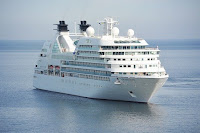
My husband and I have been to be able to take quite a few cruises over the years. Gigantic ships that come with stabilizers to ensure smooth passage and engines designed to run efficiently, effectively, and quietly made our journeys delightful excursions. From what I’ve read, the term “cruise” could hardly be applied to ocean-crossing voyages of old. 

Scholars know that early civilizations (as long ago as 4,000 years) used watercraft for transportation. It is thought the Egyptians used the first seagoing vessels, followed by the Phoenicians, Cretans, Greeks, and Romans. A thousand years later the Chinese and Japanese travel the internal and coastal waterways. However, it wasn’t until the spice and tea trades arose that shipping came into its own as an industry.
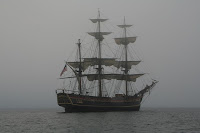
Photo: Pixabay/enzol
The Age of Sailing is considered to have lasted from the mid-1600 through the mid-1900s. A “sailingship” is simply defined as a sea-going vessel that uses sails mounted on masts in order to use the power of wind to propel it. There are a variety of sail plans or the way a ship is rigged such as the square-rigged, in which the primary driving sails are carried on horizonal spars which are perpendicular (or square) to the keel of the vessel or a fore-and-aft in which the sails are mounted along the line of the keel. 

As understanding of wind and currents progressed, and more speed was desired, the number of masts and configuration of ships changed, as did their names. A brig has two masts that are square-rigged. A full-rigged ship referred to a vessel with three or more masts. Schooners were typically fore-and-aft rigged with the foremast shorter than the mainmast. A variant is the topsail schooner that has a square topsail on the foremast. Additional variants are the barque, barquentine, and brigantine. And don’t forget the galleon or the clipper. Are you as confused as I am?? Fortunately, there will NOT be a test. As sailing ships became longer and faster over time, with taller masts and more square sails countries developed large fleets of well-armed warships. However, even the fastest ship couldn’t go more than fifteen knots, or just over seventeen miles per hour. Thus, voyages from Europe to America took from six weeks in good weather to as many as fourteen weeks in inclement weather. A long journey, to be sure. 

Photo: Pixabay/jgerim
In 1807, Robert Fulton’s steamship Clermont was the first ship to demonstrate the feasibility of steam propulsion for commercial use, but it was not until the 1840s that steam-propelled vessels came into their own. Another sixty years would pass before, the ships stopped carrying sails as a backup. By the 1860s, steamships allowed for more tonnage than sailing ships. Additionally, the speed of a steamship surpassed that of a sailing ship, some traveling as fast as nineteen knots or over twenty-one miles per hour. This seems like an imperceptible difference, but it allowed steamships to cross the ocean in just two weeks – a thrill for travelers whose berths were nothing like the spacious well-appointed cabins of today’s cruise ships. 
 
Have you ever taken a cruise? Do you sail or kayak? Or would you rather stay on land? 

___________________________

Gold Rush Bride Tegan

She’s out to prove herself. He’s only looking for adventure. Neither one realizes they’ll find more than gold “in them thar hills.”
 

Tegan Llewellyn has always been different than her adopted family, except Grandmother Hannah, a prospector during the 1829 Georgia gold rush. Now, seventy years later there are reports of gold in Nome, and the opportunity is too good to pass up. But Tegan doesn’t count on the dangers that strike from the moment she steps off the steamer, including the threat of losing her heart. 
 
Elijah Hunter has prospected for gold all over the US and Canada and likes being on the move. The last thing he expects to find on his latest search is a lady miner who proves to be nothing but trouble. Can he convince her that leaving is for her own good before it’s too late...for both of them? 

Gold Rush Bride Tegan is part of the exciting multi-author Gold Rush Brides series set in 19th century America. First, there was Hannah, then Caroline, and now Tegan. If you enjoy clean romances with a taste of intrigue, you’re sure to enjoy this series of books. You might even catch some gold fever of your own.

Purchase Link: https://amzn.to/3HClHA0

Wednesday, June 2, 2021

Western Wednesday: Gold Rush Bride Hannah

Western Wednesday: Gold Rush Bride Hannah 
 
I’m often asked where I get my story ideas and whether I’ll ever run out. With a folder chock-full of scraps and notes, I’ve got enough plotlines to keep me writing for a long time. My inspiration comes from numerous places: books or movies that I think should have been done differently, twists on Bible stories or fairy tales, newspaper headlines or magazine articles, museum displays, documentaries about people, places, or events, and snippets of conversation. 
 
The idea for Gold Rush Bride Hannah is partially the result of reading H.W. Brand’s The Age of Gold
(about the California gold rush). Jessie Benton Fremont, daughter of Missouri Senator Thomas Hart Benton, is mentioned prominently in the book. She and her husband were two of the thousands who participated in the California rush. Descriptions of her exploits got me curious about other female prospectors. In my research, I discovered that there were two major rushes prior to the one in California: one in North Carolina in 1799, and one in Georgia in 1829. Further study unearthed mention of women miners in Georgia, and I was able to find a couple of diaries as well. 
 
Many, like Jessie Fremont, came with their husbands, some of whom stayed to work the claim after being widowed. Others came with brothers or fathers. A small percentage were single and arrived on their own. My research revealed that the reasons for their desire to work the goldfields were as numerous as the women themselves: escaping a bad situation or tarnished reputation, few or no marriage prospects, a desire for financial independence, an opportunity for adventure, and as mentioned, following a husband or relative. Whatever their motivation, these women had grit and gumption, and I knew I had to share their exploits. 
 
Gold Rush Bride Hannah is the first in an exciting new multi-author series. Each month from now until December, a stand-alone gold rush story will be released. 
 
_________________

About Gold Rush Bride Hannah: 

A brand-new widow, she doesn’t need another man in her life. He’s not looking for a wife. But when danger thrusts them together, will they change their minds...and hearts? 
 
Hannah Lauman’s husband has been murdered, but rather than grief, she feels...relief. She decides to remain in Georgia to work their gold claim, but a series of incidents makes it clear someone wants her gone...dead or alive. Is a chance at being a woman of means and independence worth risking her life?
 
Jess Vogel never breaks a promise, so when he receives a letter from a former platoon mate about being in danger, he drops everything to help his old friend. Unfortunately, he arrives just in time for the funeral. Can he convince the man’s widow he’s there for her protection not for her money?

Purchase link: https://amzn.to/3oZVpz5

Tuesday, May 4, 2021

Traveling Tuesday: 19th Century Travel

Traveling Tuesday: 19th Century Travel 

 
Until the recent pandemic, most people took travel for granted. Jumping into the family vehicle or on a plane for a quick getaway was done without a lot of forethought. Living on the east coast, I can get to numerous states in just a handful of hours. 
 
Two hundred years ago, travel was much slower and more difficult. Roads were generally rutted and rudimentary, muddy quagmires when it rained, and choking dust trails when dry. Vehicles were few. Children and poorer adults walked everywhere, and only the more successful farmers had horses and wagons. Most freight was moved by oxen-driven carts. A trip from Boston to New York by horse could take four to six days, depending on weather (and that was on some of the best roads that ran between major cities). 
 
Between 1790 and 1820, “The Transportation Revolution,” occurred. Roads were rebuilt and extended. Over 3,700 miles of turnpikes (toll roads) were constructed in New England alone. Through the 1840s, country and town roads were also improved. As a result of the ability for faster travel with these better roads, the number of vehicles on the roads increased. Stagecoach lines spread across the Northeast, the name coming from the concept of using continual relays or “stages” of fresh horses spaced out every forty miles or so. Not necessarily more enjoyable, the stagecoaches averaged eight to nine miles an hour which reduced travel time. 
 
By the early 1800s, the use of steam became an emerging technology used in railroads, boats, and the
building of canals – all designed to move goods, produced and passengers. Although dangerous because of potential fires and explosions, steamboats could run on tight schedules with greater speed than overland means of travel, and became popular in a short time. 
 
The British had developed a system of canals decades earlier, but the Americans didn’t begin their infrastructure until the mid-1800s. The Erie Canal, in particular, was a great success among the American canals. Crossing the breadth of New York to connect Albany and Buffalo in 1825, it opened up the agricultural hinterland for trade with New York City and England. 

Train lines began to develop in the 1830s, with small locomotives that pulled a handful of cars over uneven track. Traveling fifteen to twenty miles per hour, train speed was twice as fast as anything Americans had experienced to date. However, most lines ran between large cities, most of them concentrated in the Northeast. Travel between New York City and Boston took less than a day using a combination of rail and steamboat. 

The first transcontinental railroad would not be completed until 1869, so westward expansion which began in the 1820s was done primarily by “prairie schooner,” large canvas-covered wagons that resembled the ocean-going vessels of the same name. A journey from the Atlantic Ocean (the eastern border of the U.S) to the western territories took months, and travelers carried as many supplies as they could, supplementing their food by hunting or foraging along the trail. 

I’ll try to remember that the next time I complain about the snacks served during an airline trip. 

____________________ 

Gold Rush Bride Hannah

A brand-new widow, she’s doesn’t need another man in her life. He’s not looking for a wife. But when danger thrusts them together, will they change their minds...and hearts? 
 
Hannah Lauman’s husband has been murdered, but rather than grief, she feels...relief. She decides to remain in Georgia to work their gold claim, but a series of incidents makes it clear someone wants her gone...dead or alive. Is a chance at being a woman of means and independence worth risking her life? 
 
Jess Vogel never breaks a promise, so when he receives a letter from a former platoon mate about being in danger, he drops everything to help his old friend. Unfortunately, he arrives just in time for the funeral. Can he convince the man’s widow he’s there for her protection not for her money? 
 
Gold Rush Bride: Hannah is the first book in the exciting new series Gold Rush Brides. Steeped in romance, intrigue, and history, the story will keep you turning pages long into the night.

Purchase Link: https://amzn.to/3350ID7

Tuesday, November 17, 2020

Traveling Tuesday: Oregon in the 1800s

Traveling Tuesday: Oregon in the 1800s 


Located in the Pacific Northwest of the United States, Oregon is bordered by the Pacific Ocean on the east, the Columbia River and Washington to the north, The Snake River and Idaho to the East, and California and Nevada to the south. The Klamath and Cascade mountain ranges are located in the western region while the Blue, Steens, and Wallowa mountains can be found in the eastern region of the state. If you like lakes, there are plenty, including Crater Lake, the deepest lake in the United States. 
 
Oregon has been home to indigenous peoples for thousands of years. The Spanish arrived in the mid-1500s to explore and map the area as well as study ocean currents. The French came soon thereafter, then the British, and finally the Americans. President Jefferson sent Meriwether Lewis and William Clark to find a practical route across the western half of the continent and to establish and American presence before the other European powers could claim it. Their secondary objectives were scientific and economic: to study the plants, animal life, and geography, and to establish trade with the local native tribes. 
 
During the 1820s and 1830s, the American West was explored by private trappers who formed fur
trading companies. John Jacob Astor’s Fort Astoria was the first permanent white settlement in the region. He had contracts with both the North West Fur Company and the Hudson’s Bay company and who made significant wealth in the fur industry before it collapsed. The high demand for beaver hats and coats coupled with the lack of regulation over trapping almost caused the extinction of beavers by the mid-19th century. However, fashions changed, and the need for trapping the animal ceased. 

Starting in the 1830s, pioneers came to the area via the famous Oregon Trail, many of whom were missionaries seeking to convert the natives to Christianity. In 1843 and “all citizen” meeting was held that instituted a provisional government headed by an executive committee. More settlers came and the territory became jointly settled with the United Kingdom. After much disagreement, the border between the US and British territory was established along the 49th parallel, with the territory above going to Britain and later becoming part of Canada. The Oregon Territory was officially organized in 1848 with bits and pieces carved off over a period of years to create the territories of Washington, Idaho, Montana and Wyoming. Oregon was admitted as a state on February 14, 1859. 
 
In 1851 and 1852, gold was discovered in the Rogue River Valley in southern Oregon, but apparently the volume was not worth working or reporting. Ten years later gold would be found in the Blue Mountains and attract a significant number of miners, including many from China. Racial prejudice persisted, and there were periodic episodes of violence in the early days of mining. However, as time passed, the Chinese and whites managed to work side by side in peaceful co-existence. 
 
As more settlers arrived, transportation infrastructure was developed, and roads such as the Barlow Road, Canyon Road, and the Applegate Trail were created and bridges built. Ferries also popped up at the many river crossings in the region. As the population continued to grow, steamboats began regular service along the rivers, and in 1858 the Cascade Railroad Company created the first line, followed by the Oregon and California Railroad. Railroads transformed the state’s economy by bringing more people, cheaper shipping, and more efficient technology to the existing industries. During this period, farming was a mainstay of the economy as acreage and productivity climbed. 
 
Have you visited this beautiful and geographically diverse state?  

_____________________________

About Legacy of Love:

Will their love come at a cost? 
 
Escaping Boston to avoid a marriage of convenience aimed at garnering society’s respect for her family name in the shadow of her father’s war profiteering, Meg Underwood settles in Spruce Hill, Oregon. Despite leaving behind the comforts of wealth, she’s happy. Then the handsome Pinkerton agent, Reuben Jessop, arrives with news that she’s inherited her aunt’s significant estate, and she must return home to claim the bequest. Meg refuses to make the trip. Unwilling to fail at his mission, Reuben gives her until Christmas to prove why she should remain in Spruce Hill and give up the opportunity to become a woman of means. When he seems to want more than friendship, she wonders if her new-found wealth is the basis of his attraction.

Purchase Link: https://amzn.to/32ML6o3