Thursday, September 1, 2022

Welcome, Linda Hoover!

Welcome, Linda Hoover!

LM: Thanks for joining me today. Congratulations on your most upcoming release Heart’s Journey. What was your inspiration for the story, and did you set out to write a series?

Linda: Thank you for allowing me to come. This is release day for Heart’s Journey, so it’s an exciting day for me. I can’t really give you something specific on inspiration. I read a lot and have always had stories in my head. The characters and ideas just came together. Originally the first book in the series, Heart’s Desire, was long enough to be two books. I was advised to consider making it a series, which I agreed was a good idea.

LM: How do you develop your characters? (e.g. decide on their vocation, names, etc.)?

Linda: In the first book, set in 1880, I knew I wanted my heroin to be in a rich family and live in a city with a lot to offer in the way of entertainment and recreation. I wanted a city in the east and found Boston to be perfect. The hero of the story grew up on a farm but is working at a jewelry store when the heroin meets him. Not an acceptable match for her. For names, I look at census records for the time period. I also look for names popular in different countries if I have a character who is from an immigrant family. Vocation is something else I research. What were the occupations available during that time?

LM: What draws you to write historical fiction?

Linda: I’ve always been interested in history. Growing up my family would take summer vacations to
Pixabay/
Dariusz Sankowski
historic places and most of the books I read were historic. I love to research, which is necessary to make sure I’m accurate, but I have to be careful I don’t lose a lot of time following rabbit trails. There are lots of interesting things to know, but they don’t always apply to the story I’m writing.

LM: You’ve been a journalist and written middle-grade fiction. How are the process different than writing fiction? The same? Do you find one easier than the other?

Linda: Writing fiction is more fun and I have a good imagination. If you’re writing nonfiction, you better make sure you have your facts straight. With fiction, I’m free to make most of it up.

LM: You’ve accomplished quite a lot. What is one thing you wish you could do?

Linda: I’ve seen some of the locations I’ve written about, but I think it would be fun if I could hop in the car or on a plane to personally check out where the story takes place.

LM: What is your advice to fledgling writers?

Pixabay/StartUpStockPhotos
Linda: One of the most important things you can do is join a writing group. I went to hear an author


speak and when I asked her some questions afterward, she invited me to come to the writing group she was part of. I joined that day. I learned so much about the craft of writing and the business side of it. You need to be around other writers who can encourage you and relate to your struggles.

LM: What is your next project?

Linda: I need to get started on book three in the Heart’s Desire series. I started a Christmas book two years ago that I’d love to finish. We’ll have to see how things go.

LM: Where can folks find you on the web?

Linda: My Linktree account will show you every place I can be found with one click: 

About Heart's Desire:
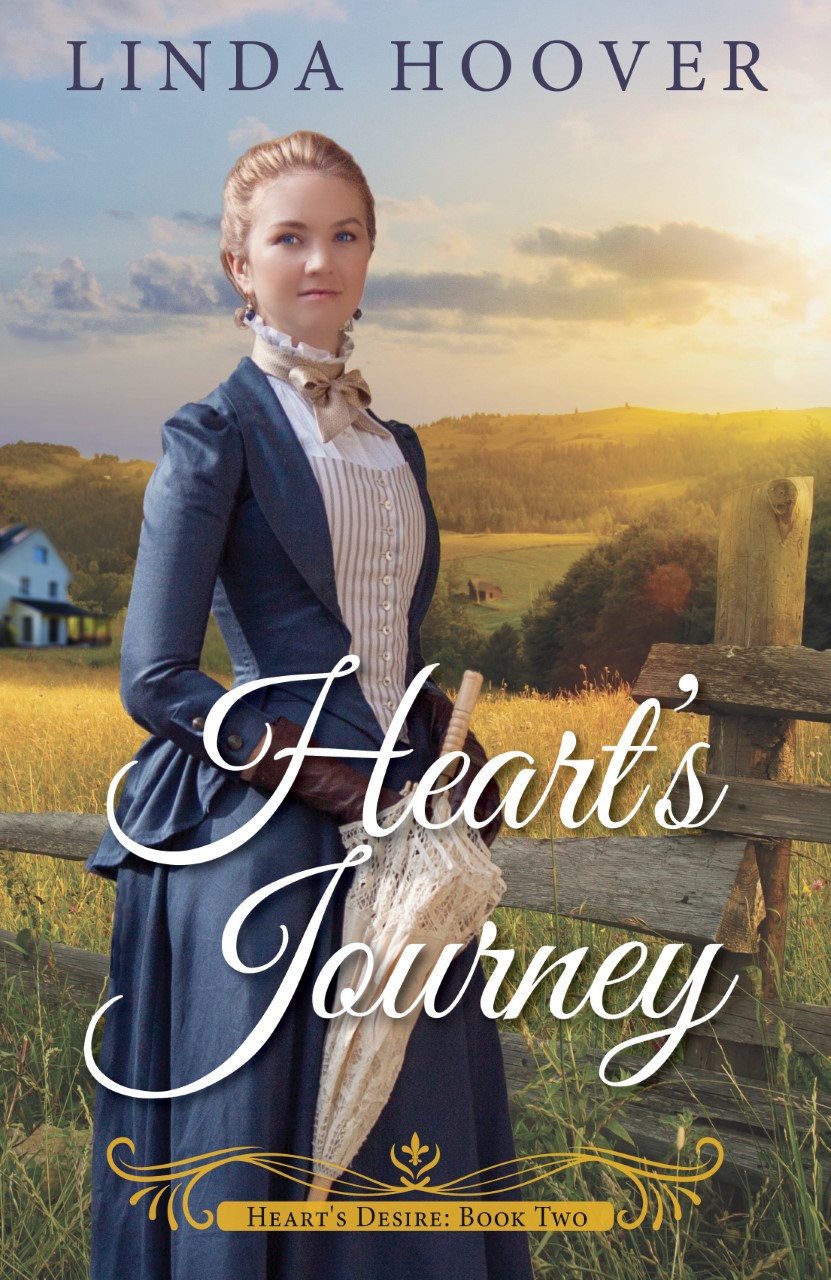
Julia goes from upper-class Boston to an Iowa farm. What could possibly go wrong?
 
In June, 1880, newlyweds Jacob and Julia go to Iowa to fulfill Jacob’s dream of having his own farm. Their original plans fall apart when they get there, and Jacob wonders, will he be able to keep the promise he made to Julia and her family?

Jacob and Julia spend much time in prayer, and God provides a better plan. Now, upper-class Julia allows herself to consider her role. She’s never been in a kitchen, let alone on a farm. How will she manage their home?

After many mishaps, Julia asks a neighbor for help, and gains confidence as she learns to cook, garden and handle other household duties. Jacob and Julia grow closer, but a personal loss for Julia triggers a disagreement leading to estrangement and deeper issues Jacob must confront. Can their faith in God bring forgiveness and reconciliation?

Purchase Link: https://amzn.to/3B5MBiJ

Wednesday, August 31, 2022

Wartime Wednesday: First Photographs at Pearl Harbor

Wartime Wednesday: First Photographs at Pearl Harbor


I’m proud of my little museum here in Wolfeboro. David Wright, the founder, started collecting military vehicles from WWII until one day a friend of his supposedly said something to the effect of: “you’ve got to do something with them besides cluttering up the yard. You should start a museum.” 

So, in 1982, the E. Stanley Wright Museum Foundation was established. It would be another ten years before David and his wife, Carole, found the perfect location in Wolfeboro, NH. In the early days, it wasn’t much, but apparently, word got out about its potential and how special it was going to be because Army photographer Lee Embree who was the first photographer to snap pictures during the attack at Pearl Harbor showed up one day at the Wright museum and offered David his photos. 

Born in Iowa in 1915, Lee enlisted in the Army Air Corps in 1936. Shortly thereafter, he was assigned
Courtesy of Wright
Museum
to the 38th Reconnaissance Squadron as an aerial photographer. By the time 1941 rolled around, he’d been promoted to staff sergeant. On the “day that will live in infamy, Lee had hitched a ride on one of twelve B-17 Flying Fortresses that was heading to Hawaii from California. He was headed to the Philippines along with a few other soldiers. 

The planes all held skeleton crews of five and carried bomb sights and machine guns but no ammunition. The 2,400-mile flight required all the gasoline the aircraft could carry. Because the B-17s were expected, the inbound Japanese planes that showed up on radar were assumed to be the Americans. 

As the pilots in the Flying Fortresses spotted the Hawaiian islands, they saw what they thought were burning sugar cane fields that bordered the air base. Not long after that, they noticed a group of fighter jets headed their way, and were glad to have escorts for the remaining miles to the field. To their dismay, the plans began to fire on them, and the bombers scattered. 

During the mayhem, Embree grabbed his camera and began snapping pictures, many of which ended up in Life, Time, and other important periodicals of the time. Copies are at the National Archives. In a 2001 interview, he was asked why he didn’t take more photos than he did. His response: “I can only answer that I was so flabbergasted at what I saw I forgot about the camera that was in my hand.” He went on to say, “They passed us so close on the left, I could see the pilots’ faces. They were grinning from ear to ear. We were just very lucky. The plane was hit several times, but we weren’t.” On the third circle over Pearl Harbor, Embree’s plane was out of fuel and forced to land (still in the midst of the attack).

Following the attack, Embree remained at the base as an aerial photographer until February 1942 when he was stationed in Fiji for nine months. He became a combat photographer with the Army Signal Corps and served in many places through the Pacific, including New Caledonia, New Zealand, the Philippines, and Guadalcanal. After the war, he enlisted in the Air Force Reserves where he retired as a major in 1957 and continued to work in photography. An interesting aside is the fact that the camera shop where Lee took his film to be developed refused to return the negatives, instead sending them to Washington, DC at the orders of U.S. Secretary of the Navy Frank Knox. According to Embree, “The next time I saw one of my photos, it was on the front cover of an Australian magazine.” He eventually got his negatives, returned to him years later in a brown envelope covered with Army postmarks from across the Pacific Ocean. 

He passed away at the age of 92 in 2008.

 _________________ 

Estelle's Endeavor

Will a world at war destroy a second chance at love? 

Estelle Johnson promised to wait for Aubry DeLuca, but then she receives word of his debilitating injuries. Does she have the strength to stand by him in his hour of need? 

Aubry DeLuca storms the beaches at Normandy, then wakes up in the hospital, his eyes bandaged. Will he regain his sight? Will the only woman he’s ever loved welcome him home or is he destined to go through life blind and alone? 

Pre-order link: https://amzn.to/3zk40Ci

Tuesday, August 30, 2022

Traveling Tuesday: Walter Reed Hospital

Traveling Tuesday: Walter Reed Hospital

In my upcoming release, Estelle’s Endeavor, my male protagonist is sent to Walter Reed General Hospital for further care after he is injured during the invasion at Normandy during WWII. I drove past the hospital during my commute in the early days of my career but rarely gave it any thought. Living in the Washington, DC/suburban Maryland area, one tends to get used to the various government facilities and installations that dot the landscape. During my research for the story, I turned up many interesting facts, especially about the hospital’s namesake.

As far back as George Washington’s era, the army medical staff realized the need for a separate military hospital campus (or reservation as one source called it), but the dream would not become reality until after the Civil War. The Washington Arsenal, located on a peninsula where the Potomac Anacostia Rivers merge, was the site of a small hospital from 1898 to 1909. It is said that Dr. Walter Reed was assigned to the Arsenal as camp surgeon from 1881 to 1882.

Reed was brilliant by all reports. He finished his two-year program in one year and received his degree at seventeen years of age from the University of Virginia in 1869. He then moved to New York where he received his second degree from Bellevue Hospital Medical College and went on to work at several hospitals within the city.

After marrying, he decided that joining the army would give him a steady income and allow him to
travel. He was commissioned as a first lieutenant assistant surgeon, and for several years he and his wife moved around the country for his assignments. At one point, he was stationed at Fort McHenry, and he took the opportunity to attend classes at Johns Hopkins University.

Bacteriology, infectious diseases, and the concept of germs was in the forefront of the study in medicine during the 1880s and early 1890s, and Reed began research into the cause of typhoid and yellow fever. His studies were breakthroughs in many ways. Not only did he disprove the theory that the diseases were spread through the air, but he was also able to prove mosquitos as the carriers. Additionally, his study was the first time test subjects signed consent forms.

In 1902, Reed died from peritonitis after an emergency appendectomy, and his friend and fellow physician Lt. Colonel William Borden was the driving force to get Congressional support to create a true medical center. It took several years, but funds were finally appropriated in the amount of $192,000, and the new facility welcomed its first ten patients on May 1, 1902. Capacity at that time was eighty beds, and the facility has grown to 5,500 rooms on nearly thirty acres.

Since its inception, Walter Reed has served more than 150,000 active and retired personnel from all branches of the military. Some of its more famous patients include Major General William Donovan (founder of the OSS), John Foster Dulles (Secretary of State), General Dwight D. Eisenhower (President of the United States), Mamie Eisenhower (First Lady), General John Pershing (Commander, U.S. Expeditionary Forces WWI), and General Douglas MacArthur (US Army Chief of Staff).

_______________________

Estelle's Endeavor 

Will a world at war destroy a second chance at love?


Estelle Johnson promised to wait for Aubry DeLuca, but then she receives word of his debilitating injuries. Does she have the strength to stand by him in his hour of need?

Aubry DeLuca storms the beaches at Normandy, then wakes up in the hospital, his eyes bandaged. Will he regain his sight? Will the only woman he’s ever loved welcome him home or is he destined to go through life blind and alone?

Pre-order link: https://amzn.to/3JlKBWe

Thursday, August 25, 2022

Welcome Lynn Basham Tagawa

Welcome Lynn Basham Tagawa

LM: Thanks for joining me today. Congratulations on your most upcoming release A Fallen Sparrow What was your inspiration for the story?

Lynne: The Great Awakening of the 1740s. I knew it had ripple effects, and so when I wrote the first book in the trilogy set during this period of great revival, I had my eye on the events of the Revolution. Our revolution was different from the bloodbath in France for a reason. Call me a nerd, but I love this stuff!

LM: I’m intrigued that you included so many real historical figures in the story. How did you go about researching the individuals, and do you worry about getting their personalities and dialogue correct?

Lynne: It all happened so organically. I wanted to place a character at the Boston Massacre. Well,
much of what we know about what happened is because Henry Knox was there. So I bought his biography, and what an interesting guy! I didn’t feel bad inventing dialogue for him. He just felt so accessible. Washington, on the other hand, only appears here and there, and I just gave him lines that are known from the historical record. I did fret a bit over my bad guy, a real-life person who went on to have lots of kids. (I couldn’t kill him LOL.) But he really did do something disturbing during the southern campaign, so I felt justified in making him nasty.

LM: What draws you to the time period of the 1700s?

Lynne: So much happened that is foundational to our country today!

LM: In addition to being an author, you are also an editor. How do you turn off your internal editor when writing?

Lynne: I really don’t. I do tell myself that with a word processing program I can always come back to it, but it’s hard. A constant struggle.

LM: You’ve written textbooks and curriculum. How is writing fiction different than nonfiction? The same? Do you find one easier than the other?

Lynne: The curriculum I just dashed off for the class. I didn’t know any rules, just that I wanted history that was fun. So I wrote it in narrative fashion, not knowing that narrative non-fiction is a thing. You see, I never wrote fiction when I was young. Research papers I could do. So really, the textbook was the breakthrough for me, asking the question, What would it have been like to be there? Later, the jump to true fiction was natural.

LM: You’ve accomplished quite a lot. What is one thing you wish you could do?

Lynne: Travel more! I’ve never seen the Shenandoah Valley, Boston, or Philadelphia except in pictures, or in using the Google Maps avatar.

Pixabay/WikiImages

LM: What is your next project?

Lynne: I’m working on a couple of novellas for the series. One is a fleshing out of the relationship of two secondary characters from The Heart of Courage. The other is an epistolary where one of my characters from A Fallen Sparrow goes to the Constitutional Convention.

LM: Where can folks find you on the web?

Lynne: 
 Facebook: https://www.facebook.com/lynne.tagawa

About A Fallen Sparrow

It was all Samuel Adams’s fault.


Ruth Haynes uses the pen name Honorius when she writes for her father’s newspaper. Boston has changed beyond recognition, and her Loyalist views soon get her in trouble. With war looming, what will their family do?

Jonathan Russell hides a guilty secret. The Battle of Bunker’s Hill sweeps him and his Shenandoah Valley family into the war. The unthinkable happens, and he’s forced to deal with both his grief—and his guilt.

Lieutenant Robert Shirley is summoned by his godmother and introduced to the Earl of Dartmouth, who charges him to gather intelligence in Boston. He is horrified but must obey.

Gritty, realistic, and rich with scriptural truth, this story features Dr. Joseph Warren, Major John André, Henry Knox, and Lt. Col. Banastre Tarleton.

Purchase Link: https://amzn.to/3cI1b6s

Tuesday, August 23, 2022

Traveling Tuesday: Baltimore During WWII

Traveling Tuesday: Baltimore During WWII

The history of Baltimore begins nearly three hundred years ago, its residents living through economic booms and busts, social and political upheaval, fire, and war, the last of which was a mixed blessing for the city.

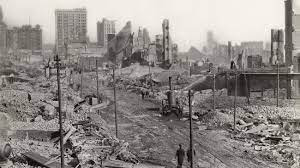
A mere three decades prior to World War II Baltimore suffered a massive fire. At the corner of German (now Redwood) and Liberty Streets smoke rose from the basement of a dry goods store, then shortly before eleven o’clock in the morning, the building exploded. Burning debris landed on nearby structures, and the winds fanned the flames, pushing them even farther until the entire downtown area was ablaze. Thirty hours later, Baltimore firemen and those who had arrived from other cities along the East Coast put out the fire that had consumed 140 acres, destroyed 1,526 buildings, and burned out 2,500 companies. It would take the city ten years to fully rebuild.

World War I, also known as The Great War, brought economic and social changes. Manufacturing
plants sprang up or expanded creating jobs and supporting the war effort. Anti-German sentiment brought name changes to streets and businesses (German Street became Redwood Street, and German-American Bank became American Bank). Unfortunately, twelve years after the war ended, the Depression would nearly devastate the city. Baltimore Trust Company closed its thirty-two-story skyscraper, and by 1933, the governor closed all the banks to prevent mass withdrawals. By 1934, almost 30,000 residents were unemployed. Federal resources such as the Civil Works Administration and the Works Progress Administration helped, but it took the second world war to bring Baltimore back to its former glory.

Two of the largest government contractors were the Glenn L. Martin plant that produced military aircraft such as the B-26 Marauder and the Bethlehem-Fairfield shipyard which built Liberty ships and had the honor of launching the first, the SS Patrick Henry. Camp Holabird is where the army tested the world-famous jeep and trained the soldiers who would keep those jeeps and other military vehicles operating. Coast Guard sailors trained at Fort McHenry and Curtis Bay. And thousands of men and women would go overseas to fight the enemy in every theatre of war.

Like everywhere else in the nation, residents planted victory gardens, but Baltimore went one step further when Henry P. Irr, president of Baltimore Federal Savings and Loan, sponsored a statewide competition and offered bonds as prizes. Constance Black, wife of Baltimore Sun executive Harry Black, tilled a section behind their mansion and put in boysenberries, currants, cabbage, chard, and fruit trees. Apparently, not to be outdone, her husband rode to work in a horse and carriage.

By all reports, Baltimore became a twenty-four-hour city. Manufacturers operated three shifts, and many support businesses extended their hours. Housing became a major issue as people flooded the city to work at the various plants. Many houses were cut up into small apartments, and some rowhouses were fitted with multiple beds, each bed shared among three men, one per eight-hour shift. Unfortunately, the city was not a welcoming place for people of color, and segregated housing was poor at best. According to one source, Baltimore refused federal money to build permanent public housing for African Americans, instead “opting for temporary trailers so they can be easily moved out after the war is over.”

Since the war, Baltimore has continued to experience the ebb and flow of success and failure, growth and stagnation, stability and unrest, but as shown in her history, the city and her people will prevail.

__________________

Estelle's Endeavor

Will a world at war destroy a second chance at love?

Estelle Johnson promised to wait for Aubry DeLuca, but then she receives word of his debilitating injuries. Does she have the strength to stand by him in his hour of need?

Aubry DeLuca storms the beaches at Normandy, then wakes up in the hospital, his eyes bandaged. Will he regain his sight? Will the only woman he’s ever loved welcome him home or is he destined to go through life blind and alone?

Pre-order link: https://amzn.to/3zk40Ci

Thursday, August 18, 2022

Talkshow Thursday: Welcome Back, Kathleen Bailey!

Talkshow Thursday: Welcome Back, Kathleen Bailey!

Linda: Welcome back! Congratulations on your upcoming release Redemption’s Hope. I can’t wait to read it. Where did you find your inspiration for this installment in your Western Dreams series?

KATHLEEN: Linda, it is great to be here. Honestly, I didn’t have to be inspired for Jenny’s book. She had a powerful presence in the first two “Western Dreams” books. I couldn’t NOT write about her.

LM: I love hearing that. After years of writing nonfiction as a journalist, why and how did you end up writing historical fiction?

KATHLEEN: I’ve wanted to be a novelist since I was six years old. It just took me longer than most people. Journalism paid the bills – and taught me discipline and deadline-keeping.

LM: Research is an important part of the writing process. What sort of research did you do for Redemption’s Hope? Did you unearth anything that was totally unexpected?

KATHLEEN: “Redemption’s Hope” was tricky logistically, because I had to coordinate the two lovers and two distinct sets of villains, one after her and one after him, and I had to move them around the then-known world. I used a lot of charts and maps to make sure everyone was in the right place. My other two books were pretty static, even the Oregon Trail one – they moved a lot, but they were all going in the same direction. This was more of a saga/epic, and I had a lot of coordinating to do.

LM: Sounds intriguing! As mentioned, you’re also a journalist and have an upcoming nonfiction book
coming out about war monuments in New Hampshire. How do you juggle the two genres.?

KATHLEEN: It’s all writing. It’s all telling stories. I tend to spend more time on whichever project needs me at the moment, but it all balances out.

LM: What do you do to prepare for writing?

KATHLEEN: Earl Grey tea in a china cup, and deal with my social media and correspondence first, so I can concentrate.

LM: How do you come up with your characters (names, jobs, physical attributes, etc.)?

KATHLEEN: It’s almost a mystical process. My characters show up first and I riff on that. Plotting does not come as easy…

LM: What was your favorite childhood book?

KATHLEEN: Maud Hart Lovelace’s Betsy, Tacy and Tib series. Kind of like “Little House,” only in a small Minnesota town just after the turn of the century and before World War I. But the books have the “Little House” insight into the child’s mind. The “Betsy” character wanted to be a writer, and I related to that. I also loved Edward Eager’s “Magic” series, including “Half Magic” and “Knight’s Castle.” I graduated to “A Wrinkle in Time,” which was the Harry Potter of my generation.

LM: I loved A Wrinkle in Time. What are you currently working on?

Pixabay/John French
KATHLEEN: I’m editing a novel about Lexington and Concord. But the West won’t leave me alone, so I’m researching another Western book.

LM: Where can folks find you on the web?

KATHLEEN: Facebook and LinkedIn, Kathleen D. Bailey; Twitter, @piechick1.


_____________________

About Redemption's Hope:


Two orphaned children. Two different sets of villains. A man without a country and a woman with too much past. And a rambunctious young country where anything went, especially in the West. Seriously. What could go wrong?

Purchase Link: https://amzn.to/3AEutN4

Monday, August 15, 2022

Mystery Monday: Fergus Hume

Mystery Monday: Fergus Hume

WikiImages
Despite publishing over one hundred and thirty novels, Ferguson (or Fergusson) Wright Hume, writing as Fergus Hume, has long been forgotten. He was born in Powick, Worcestershire, England, but when he was three years old the family emigrated to Dunedin, New Zealand where his father founded the first private mental hospital. After graduation with a law degree from the University of Otago, he was admitted to the bar in 1885 and went to work as a barrister’s clerk in Melbourne.

In his off hours, he wrote plays, but couldn’t find anyone among the theaters to accept, let alone read his scripts. He was given the advice to write novels to grab the attention of theater managers. Knowing how popular French mystery author Emile Gaboriau was in Melbourne, Hume decided to pursue detective fiction. He purchased a set of Gaboriau’s novels to read and study after which he wrote The Mystery of a Hansom Cab.

Said Hume: “Having completed the book, I tried to get it published, but everyone to whom I offered it
refused to even look at the manuscript on the grounds that no Colonial (referring to his New Zealand upbringing) could write anything worth reading.” He self-published 5,000 copies of the book in 1886, which reportedly sold out in three weeks. However, he saw little of the profits because of having sold the British and American rights. (Guess it seemed like a good idea at the time!) Fortunately, he retained the dramatic rights, and the play version saw long Australian and London theater runs.

The plot seems simple: a man is found dead in a hansom cab and one of Melbourne’s leading citizens is accused of the crime. He claims to be innocent, yet refuses to provide an alibi. Then the author adds a determined lawyer and equally determined detective who unearth long-kept secrets, and the riddles and complexities begin. The book is the first of the Melbourne Trilogy, but the first story was the most popular. When asked what he thought about the book, Arthur Conan Doyle commented, “Hansom Cab was a slight tale, mostly sold by ‘puffing.’” Jealous, perhaps? His Study in Scarlet came out the following year.

Pixabay/
PublicDomainPictures
In 1888, Hume returned to England where he lived for almost thirty years at Church Cottage in Thundersley, Essex. He never married and traveled extensively. Several reports say he was a “deeply religious” man and tended to avoid publicity. He was a prolific writer, but he never saw the same success that he’d had with his debut novel. Toward the end of his life, he often lectured at young people’s clubs and debating societies.

He died of a heart attack in July 1932 and left an estate valued at £201. Many of his works can be found in Project Gutenberg for no cost. Check one of them out!

___________________

Under Fire


Set in April 1942, Under Fire, the first book in the Ruth Brown Mystery Series, tells the story of Ruth Brown whose missing sister jane is declared dead. Convinced her sister is still alive, Ruth follows clues from her small New Hampshire town to war-torn London trying to find her. Discovering that Jane has been murdered results in a faith crisis for Ruth, and she decides she must find Jane’s killer. During her search for the culprit, she runs into smugglers, resistance fighters, and the IRA, all of whom want her dead for what she knows.

Purchase Link: http://www.amazon.com/dp/B0743MS95H