Showing posts with label Mystery Monday. Show all posts

Monday, August 15, 2022

Mystery Monday: Fergus Hume

Mystery Monday: Fergus Hume

WikiImages
Despite publishing over one hundred and thirty novels, Ferguson (or Fergusson) Wright Hume, writing as Fergus Hume, has long been forgotten. He was born in Powick, Worcestershire, England, but when he was three years old the family emigrated to Dunedin, New Zealand where his father founded the first private mental hospital. After graduation with a law degree from the University of Otago, he was admitted to the bar in 1885 and went to work as a barrister’s clerk in Melbourne.

In his off hours, he wrote plays, but couldn’t find anyone among the theaters to accept, let alone read his scripts. He was given the advice to write novels to grab the attention of theater managers. Knowing how popular French mystery author Emile Gaboriau was in Melbourne, Hume decided to pursue detective fiction. He purchased a set of Gaboriau’s novels to read and study after which he wrote The Mystery of a Hansom Cab.

Said Hume: “Having completed the book, I tried to get it published, but everyone to whom I offered it
refused to even look at the manuscript on the grounds that no Colonial (referring to his New Zealand upbringing) could write anything worth reading.” He self-published 5,000 copies of the book in 1886, which reportedly sold out in three weeks. However, he saw little of the profits because of having sold the British and American rights. (Guess it seemed like a good idea at the time!) Fortunately, he retained the dramatic rights, and the play version saw long Australian and London theater runs.

The plot seems simple: a man is found dead in a hansom cab and one of Melbourne’s leading citizens is accused of the crime. He claims to be innocent, yet refuses to provide an alibi. Then the author adds a determined lawyer and equally determined detective who unearth long-kept secrets, and the riddles and complexities begin. The book is the first of the Melbourne Trilogy, but the first story was the most popular. When asked what he thought about the book, Arthur Conan Doyle commented, “Hansom Cab was a slight tale, mostly sold by ‘puffing.’” Jealous, perhaps? His Study in Scarlet came out the following year.

Pixabay/
PublicDomainPictures
In 1888, Hume returned to England where he lived for almost thirty years at Church Cottage in Thundersley, Essex. He never married and traveled extensively. Several reports say he was a “deeply religious” man and tended to avoid publicity. He was a prolific writer, but he never saw the same success that he’d had with his debut novel. Toward the end of his life, he often lectured at young people’s clubs and debating societies.

He died of a heart attack in July 1932 and left an estate valued at £201. Many of his works can be found in Project Gutenberg for no cost. Check one of them out!

___________________

Under Fire


Set in April 1942, Under Fire, the first book in the Ruth Brown Mystery Series, tells the story of Ruth Brown whose missing sister jane is declared dead. Convinced her sister is still alive, Ruth follows clues from her small New Hampshire town to war-torn London trying to find her. Discovering that Jane has been murdered results in a faith crisis for Ruth, and she decides she must find Jane’s killer. During her search for the culprit, she runs into smugglers, resistance fighters, and the IRA, all of whom want her dead for what she knows.

Purchase Link: http://www.amazon.com/dp/B0743MS95H

Monday, July 11, 2022

Mystery Monday: Crime Writer Mabel Seeley

Mystery Monday: Crime Writer Mabel Seeley

I love to immerse myself in the books that would be read by my characters. It’s especially fun for me to sometimes find little-known authors or authors who were wildly popular at the time but have fallen into obscurity. Today’s author, Mabel Seeley, falls into the latter category.

Born Mabel Hodnefield in 1903, in Herman, Minnesota, a tiny hamlet nearly two hundred miles northwest of Minneapolis. Still small, the town boasted a population of 437 in the 2010 census. I can’t imagine how much smaller it must have been in the early part of the last century.

When she was seventeen, her family moved to St. Paul where she attended Mechanic Arts High School, then went on to graduate summa cum laude from the University of Minnesota. Her love of writing grew from exposure (and perhaps classes with) Mary Ellen Chase a scholar, educator, and author in her own right who was teaching there at the time.

Mabel married fellow UM student Kenneth Seeley in 1926, and they moved to Chicago where she got a job writing advertising copy for a department store (a background that would be the setting of her first book, The Listening House published in 1938). After her husband developed tuberculosis, they returned to Minnesota for his medical treatments. He recovered, but they divorced sometime later.

After WWII, she and her son moved to Colorado. An avid midwesterner, Mabel set all her books in
Minnesota. She delved deeply into her research for each book, going so far as to visit a North Shore lake at night time to capture an eerie feeling. She also ran through fields of tall, dry grass to see how grasshoppers respond when startled. For another book, she spent time in her uncle’s grain elevator to experience the wind whistling in the bins and to hear the talk of farmers. (Now, that’s research!)

Most readers, even devoted mystery readers, are unfamiliar with her work, but she was highly popular during her lifetime. Her books were highly praised in some of the most noteworthy publications of the day such as Saturday Review and The New Yorker. The Saturday Review of Literature named The Crying Sisters (1939) best mystery of the year, and The Chuckling Fingers won Mystery of the Year award in 1941. An early member of Mystery Writers of America, she served on the organization’s first Board of Directors.

Long before modern feminism, Mabel wrote female protagonists who were “smart, frank, and strong-willed.” The characters are typically middle class working such jobs as librarian, copywriter, and stenographer. The heroines are not private investigators, but rather women caught in unusual circumstances requiring them to fight to save those they love.

Unfortunately for readers, Mabel married attorney Henry Ross in 1956 and chose to stop writing, telling one reporter that she did so to devote more time to her marriage. She passed away on June 9, 1991.


_____________________

About Murder at Madison Square Garden

The dream of a lifetime becomes a nightmare.


Photojournalist Theodora “Teddy” Schafer’s career has hit the skids thanks to rumors of plagiarism. With any luck, a photo spread with Charles Lindbergh at the America First Rally will salvage her reputation. After an attempted assassination of Lindbergh leaves another man dead, Teddy is left holding the gun. Literally. Can she prove her innocence before the police lock her up for a murder she didn’t commit?

Private Investigator Ric Bogart wants nothing to do with women after his wife cleaned out their bank account and left him for another man, but he can’t ignore the feeling he’s supposed to help the scrappy, female reporter who is arrested for murder at the America First rally. Can he believe her claims of innocence and find the real killer without letting Teddy steal his heart?

Purchase Link: https://books2read.com/u/31qK17

Monday, June 13, 2022

Mystery Monday: 1800s Mysteries

Mystery Monday: 1800s Mysteries 

Photo: WikiImages
Think Louisa May Alcott, and her book Little Women springs to mind. But you’ll probably be surprised to discover that long before she wrote the young adult classic, she made her living writing gothic and mystery stories. 

Born in 1832, she was raised in New England (primarily Massachusetts) by transcendentalist parents, her upbringing didn’t include a lot of formal education. Primarily homeschooled, Louisa had to go to work in her teens because of her family’s financial straits. However, her parents’ friends included such literary greats as Ralph Waldo Emerson, Nathaniel Hawthorne, Henry David Thoreau, and Henry Wadsworth Longfellow, so she was able to learn from the masters. 

Not unusual for the time, she published under the pen name A.M. Barnard. Her stories have been described as “lurid” and “sensational.” Her novels focused on passion and revenge. Hard to believe after reading Little Men and Jo’s Boys. However, these books were highly popular and she received critical success during the 1860s. 

She signed up for a three-month period to serve as a nurse at the Union Hospital in Georgetown, Washington, DC during the Civil War, but had to quit after six weeks because of contracting typhoid. In 1863, she published Hospital Sketches based on letters she sent home during her time as a nurse. 

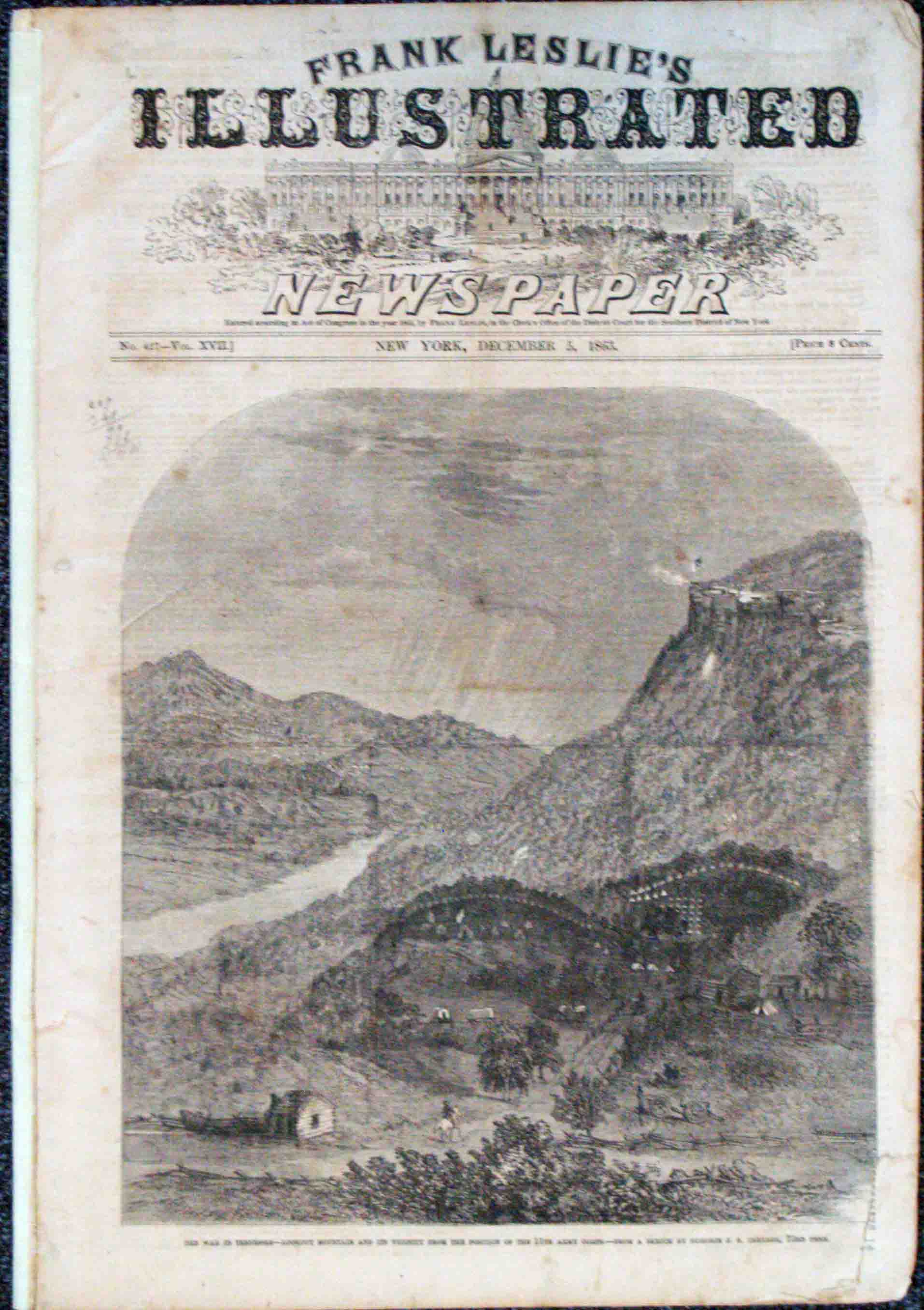
That same year she won the $100 prize from Frank Leslie’s Illustrated Weekly (a periodical purported to be similar to the National Inquirer “minus the TV and movie celebrities,” for the short story Pauline’s Passion and Punishment. Described by one commentator as “mild stuff if read from the perspective of a 21st-century reader,” the story is one of love, anger, and betrayal. Goodreads states, “The beautiful Pauline has been wronged and sets about getting a little of her own back. Collateral damage ensues in this tale of revenge and its consequences.” Despite the themes, the author managed to keep offensive material out of the story. 

The plot is simple: Pauline is jilted by her beloved Gilbert who leaves her for a wealthy heiress. As a result, Pauline plans revenge by marrying a nice young man named Manuel. As Manuel is in love with her, he agrees to the marriage even after she informs him of her motive to make Gilbert jealous and remorseful. Her plan works, and her former beau is desperate to win her back even though he is married. In a bit of irony, Manuel meets and grows close to Gilbert’s wife. Pauline manipulates those around her to carry out her wishes, creating chaos and tragedy. The consequences are severe, but she’ll stop at nothing until Gilbert has felt the same pain she did. I

In many ways, the ending is a surprise, but in others typical of Alcott’s writings. It is available for free in many places including the Gutenberg project, so you can read it for yourself. 

 ___________________ 

Ellie's Escape

She’s running for her life. He needs a trophy wife. They didn’t count on falling in love. 

Ellie Wagner is fine being a spinster school teacher. Then she witnesses a bank hold up and can identify the bandits. Fellow robbery victim Milly Crenshaw happens to run the Westward Home & Hearts Matrimonial Agency so she arranges for Ellie to head West as a mail-order bride. But her groom only wants a business arrangement. Can she survive a loveless marriage? 

Banker Julian Sheffield is more comfortable with numbers than with people, but he’s done well for himself. Then the bank president tells him that in order to advance further he must marry in six weeks’ time. The candid, unsophisticated woman sent by the agency is nothing like he expected, but time is running out. When her past comes calling, does he have what it takes to ensure their future?

Monday, April 11, 2022

Mystery Monday: Ian Fleming vs. James Bond

Mystery Monday: Ian Fleming vs. James Bond 
 
Photo: WikiImages
Most folks are familiar with James Bond even if they don’t read spy fiction/thrillers. According to creator/author Ian Fleming, Bond is the “compound of all the secret agents and commando types I met during the war.” Fleming wrote fourteen novels before his death, and thirty-four additional novels and short stories have been penned by other authors. Long before he left Naval Intelligence Division, Fleming told a friend he planned to become an author and “write the spy story to end all spy stories.” With his experience, he certainly had enough fodder. 
 
But where does Fleming end and Bond begin? 

Image commissioned
by Fleming
The character’s name was taken from that of American ornithologist James Bond, an expert on Caribbean birds and author of the definitive guide Birds of the West Indies. Fleming was an avid birdwatcher and owned a copy of Bond’s book. It is said he later told the man’s wife that “this brief, unromantic, Anglo-Saxon and yet very masculine name was just what I needed, and so a second James bond was born.” Other characters were given names of Fleming’s school friends, acquaintances, relatives, and lovers. 

Bond is described as having “black hair falling down over the right eyebrow...a bit cruel in the mouth, and the eyes were cold.” Some say Bond is a cross between Fleming and his friend, Hoagy Carmichael. Fleming also bestowed his own tastes and traits on Bond. Bond had the same golf handicap, loved scrambled eggs and gambling, and used Fleming’s brand of toiletries. In addition, like Fleming, the character was a womanizer, a heavy drinker, and smoked regularly. 

Photo: Pixabay/
Roberto Lee Cortes
Some scholars have posited that rather than an extension of Fleming, Bond is the author’s wish fulfillment, referencing the fact that the author spent most of the war at a desk, managing intelligent-gathering operations remotely. According to his biographer, Andrew Lycette, “He saw all these secret agents arriving from interesting assignations and he sort of decided he would have liked to have been more like them.” 
 
Perhaps. You be the judge. 

________________________________

Spies & Sweethearts

She wants to do her part. He’s just trying to stay out of the stockade. Will two agents deep behind enemy lines find capture… or love? 

1942. Emily Strealer is tired of being told what she can’t do. Wanting to prove herself to her older sisters and do her part for the war effort, the high school French teacher joins the OSS and trains to become a covert operative. And when she completes her training, she finds herself parachuting into occupied France with her instructor to send radio signals to the Resistance. 

Major Gerard Lucas has always been a rogue. Transferring to the so-called “Office of Dirty Tricks” to escape a court-martial, he poses as a husband to one of his trainees on a dangerous secret mission. But when their cover is blown after only three weeks, he has to flee with the young schoolteacher to avoid Nazi arrest. 

Running for their lives, Emily clings to her mentor’s military experience during the harrowing three-hundred-mile trek to neutral Switzerland. And while Gerard can’t bear the thought of his partner falling into German hands, their forged papers might not be enough to get them over the border. Can the fugitive pair receive God’s grace to elude the SS and discover the future He intended?

Monday, February 28, 2022

Mystery Monday: The Mystery of Leap Year

Mystery Monday: The Mystery of Leap Year 


Photo: Pixabay/
Simple-aign
With 2022 being an “even” year, I wondered if it was a leap year, but rushing to the calendar set me straight. The next leap year will occur in 2024. 

First introduced by Julius Caesar more than 2000 years ago, the formula had only one rule: any year evenly divisible by four would be a leap year. Several hundred years later, it was determined that the Julian calendar (named after him) was drifting apart from the tropical year at a rate of one day every 128 years. As a result the Gregorian calendar, implemented by Pope Gregory XIII, skipped some days to realign the calendar with the seasons. 

Photo: Pixabay/
Gordon Johnson
The reason for creating a leap year came from the fact that the earth doesn’t orbit the sun in precisely 365 days, and the extra day acts as a “corrective measure.” Prior to the onset of the Gregorian calendar, many ancient calendars had entire leap months to rectify the problem, however, historians are still unclear as to how the early Romans kept track of their years, mostly because the Romans themselves weren’t entire sure. Research indicates that the Roman calendar consisted of ten months plus and “ill-defined winter period of varying length.” 

There is one exception to the leap year rule that involves century years, such as 1900. Because adding an extra day every four years results in about three extra days being added over the course of four hundred years. Therefore century years are only considered leap years if they are easily divisible for 400, meaning 1700, 1800, and 1900 were not leap years, but 1600 and 2000 were leap years. (who knew this much thought was necessary!!) 

Photo: WikiImages
According to some sources, a tradition in Ireland and Britain allows women to propose marriage during a leap year. In Finland, if a man refuses a woman’s proposal on leap day, he is to purchase her the fabric for a skirt. In Greece, marriage in a leap year is considered unlucky, with twenty-percent of engaged couples choosing not to marry during a leap year. 

There are over four million leap day babies, whom are called leapers or leaplings. There is a one in 1,461 chance of being born on leap day. Actress and performer Dinah Shore, saxophonist and bandleader Jimmy Dorsey, Italian composer Rossini, and actor Dennis Farina were all born February 29. 

Do you know any leap year babies?
 _______________ 

Gold Rush Bride Tegan 

She’s out to prove herself. He’s only looking for adventure. Neither one realizes they’ll find more than gold “in them thar hills.” 

Tegan Llewellyn has always been different than her adopted family, except Grandmother Hannah, a prospector during the 1829 Georgia gold rush. Now, seventy years later there are reports of gold in Nome, and the opportunity is too good to pass up. But Tegan doesn’t count on the dangers that strike from the moment she steps off the steamer, including the threat of losing her heart. 

Elijah Hunter has prospected for gold all over the US and Canada and likes being on the move. The last thing he expects to find on his latest search is a lady miner who proves to be nothing but trouble. Can he convince her that leaving is for her own good before it’s too late...for both of them? 

Purchase Link: https://amzn.to/3BBdD0c

Monday, January 10, 2022

Mystery Monday: Murder on the Orient Express

Mystery Monday: Murder on the Orient Express 
 
Photo: WikiImages
Published eighty-eight years ago this month, Agatha Christie’s Murder on the Orient Express is still one of her most popular books. Additionally, the book regularly appears in lists denoting the top one hundred mysteries of all time. The story was originally titled Murder on the Calais Coach. 
 
Orient Express was Christie’s twelfth novel and inspiration for the book came from several places, the first of which was the kidnapping and subsequent murder of Charles Lindberg’s son that occurred two years prior to her writing. In 1928, Christie took her first trip on the Orient Express and a few months later, the train was marooned in Turkey during a six-day blizzard. On a later journey the train was halted for twenty-four hours because of flooding, and Christie’s experience also served as inspiration, especially with regard to passengers. 
 
For those unfamiliar with the book, Murder on the Orient Express features Hercule Poirot, the "world-
famous” sleuth from Belgium. He is approached by American businessman Samuel Ratchett who asks for protection because of threats he’s received. Poirot refuses the case, and that evening the train is stopped because of heavy snowfall. The following morning, he is informed that Ratchett has been murdered. With the train unable to go anywhere (or for anyone to reach them), Poirot is tasked with finding the murderer. Much of the book involved the suspects being interviewed and the detective searching various parts of the train. 
 
The book was highly successful, with critics lauding it with statements such as the book “keeps her readers enthralled to the end,” and “what more can a mystery addict desire?” One website comments that “Agatha Christie has been hailed as the queen of crime fiction, and Murder on the Orient Express might just be her crown jewel. 
 
Christie’s story had been adapted to radio (1992-1993), film (1974: starring Albert Finney, and 2017: starring Kenneth Branagh), stage (2017) and television, including a 1955 German and 2015 Japanese version. In 1985, a board game based on the novel was released as well as a 2006 computer game featuring David Suchet’s voice as Poirot. The book has never been out of print. 

Have you read this classic?
 _______________________ 
 
Happy book birthday, Under Ground 
 
It’s been six months since Ruth Brown followed clues to England and discovered the identity of her sister’s killer. War continues to rage as Ruth reports on food shortages, the black market, the evacuation of London’s children, and the bravery of the British people. When a bombing raid destroys her home and unearths a twenty-year-old skeleton in the cellar, her reporter’s senses tingle in anticipation of solving another mystery. Unfortunately, the by-the-book detective inspector assigned to the case is not interested in her theories. As Ruth investigates the case on her own, she butts heads with the handsome policeman. 
 
Will she get to the bottom of the story before the killer strikes again?

Purchase Link: https://amzn.to/3qUJnbr

Monday, December 20, 2021

Mystery Monday: Who was Cyril Hare

Mystery Monday: Who was Cyril Hare?

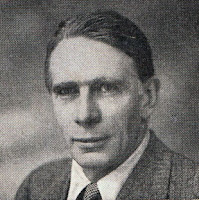
Despite being one of the prolific authors from the Golden Age of Detective Fiction, Cyril Hare has been largely forgotten by the reading public. A combination of Hare Court (where he worked) and Cyril Mansion (where he lived), the name is a pseudonym for Alfred Alexander Gordon Clark, who was born on September 4, 1900. His family was part of the Matthew Clark & Sons drink distribution company founded in 1810. 
 
Clark was educated at St. Aubyn’s, then Oxford where he graduated with a First. He studied law and entered the Bar in 1924. Nine years later he married Mary Barbara Lawrence, daughter of Sir William Lawrence, 3rd Baronet, horticulturalist, hospital administrator, and collector. They had three children, a son and two daughters, all of whom were very successful. 
 
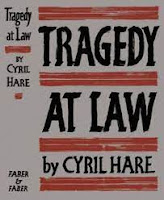
At some point in the 1930s, Clark began penning mystery stories. The first, Tenant for Death, a story he adapted from a stage play he’d written, was published in 1937. That same year he also published a short story titled The Death of Amy Robsart. He published another novel and some short stories, but his breakout success came in 1942 with the publication of Tragedy at Law. 
 
Most scholars feel he based the plotline on his experiences during WWII when he toured as a judge’smarshal. He worked for the Director of Public Prosecution as well as serving with the Ministry of Economic Warfare. His wartime job must have kept him exceptionally busy because Clark wouldn’t publish another novel until 1946: With a Bare Bodkin. 
 
In 1950, he was appointed a county court judge in Surrey but managed to continue writing with regularity, publishing three to five short stories per year, mostly for "The Evening Standard." Tragedy at Law has never been out of print and has been praised by critics and authors as being among the best legal whodunits ever written. All in all, Clark published ten novels, forty short stories, one radio play, and two stage plays. 
 
Because of a bout with tuberculosis during WWII, his health suffered, and he passed away August 25, 1958, ten days before his 58th birthday. 

Have you ever heard of Cyril Hare? 

___________________________

Murder at Madison Square Garden 

The dream of a lifetime becomes a nightmare. 
 
Photojournalist Theodora “Teddy” Schafer’s career has hit the skids thanks to rumors of plagiarism. With any luck, a photo spread with Charles Lindbergh at the America First Rally will salvage her reputation. After an attempted assassination of Lindbergh leaves another man dead, Teddy is left holding the gun. Literally. Can she prove her innocence before the police lock her up for a murder she didn’t commit? 
 
Private Investigator Ric Bogart wants nothing to do with women after his wife cleaned out their bank account and left him for another man, but he can’t ignore the feeling he’s supposed to help the scrappy, female reporter who is arrested for murder at the America First rally. Can he believe her claims of innocence and find the real killer without letting Teddy steal his heart?

Purchase Link: https://amzn.to/3mcTXcs

Monday, November 29, 2021

Mystery Monday: The Notting Hill Mystery

Mystery Monday: The Notting Hill Mystery 
 
The Notting Hill Mystery
was initially published as an eight-part serial between 1862 and 1863 in the magazine Once a Week. Written under the pseudonym Charles Felix, the story is thought to be the first detective novel, pre-dating Wilkie Collin’s The Moonstone which is often touted as holding that honor. No one knows for certain who wrote the book, but scholars who love to argue that sort of thing have since come to the conclusion that Charles Warren Adams is the author. 
 
Not much is known about the man other than the fact he was born in 1833 in England. He became a lawyer and somehow became involved in “bailing out” the London publishing firm of Saunders, Otley & Co. after the two owners died. Despite his efforts, the firm was liquidated in 1869. However, prior to that, the company had published Velvet Lawn in 1864 and The Notting Hill Mystery in book form in 1865, both written by the aforementioned Charles Felix. 
 
Adams married twice. The first time, he wed Georgina Alethe Polson in 1861, and she passed away in 1880. At some point after that, he met Mildred Coleridge (great-grandniece of the poet Samuel Taylor Coleridge.) She left home to live with Adams, causing an upheaval in her family. Her brother penned a long letter to her attacking Adams who took the man to court for libel and won the case. He and Mildred were married on June 24, 1885 and remained together until Adam’s death in July 1903. 
 
No matter who wrote The Notting Hil Mystery, it is a fun story told by insurance investigator Ralph Henderson who is building a case against Baron “R_____” who is suspected of killing his wife for the insurance payment. (A plotline that continues to show up to this day.) According to one summary, Henderson “descends into a maze of intrigue including a diabolical mesmerist, kidnapping by gypsies, slow-poisoners, a rich uncle’s will and three murders.” 
 
Interestingly, the story is presented using diary entries, letters, chemical analysis reports, interviews with witnesses, and a crime scene map. These techniques didn’t become part of crime fiction until the 1920s. The book was illustrated by George du Maurier (Daphne du Maurier’s grandfather). Pilot Press Ltd. Of London reprinted the novel in 1945 as part of its anthology Novels of Mystery from the Victorian Age. In 2011, the British Library made the book available via print-on-demand, and it sold so many copies, they produced a trade edition in 2012. An ebook edition is also available.


______________ 

Murder at Madison Square Garden:

The dream of a lifetime becomes a nightmare. 

Photojournalist Theodora “Teddy” Schafer’s career has hit the skids thanks to rumors of plagiarism. With any luck, a photo spread with Charles Lindbergh at the America First Rally will salvage her reputation. After an attempted assassination of Lindbergh leaves another man dead, Teddy is left holding the gun. Literally. Can she prove her innocence before the police lock her up for a murder she didn’t commit? 
 
Private Investigator Ric Bogart wants nothing to do with women after his wife cleaned out their bank account and left him for another man, but he can’t ignore the feeling he’s supposed to help the scrappy, female reporter who is arrested for murder at the America First rally. Can he believe her claims of innocence and find the real killer without letting Teddy steal his heart?

Purchase Link: https://amzn.to/3rcz6JF

Monday, November 15, 2021

Mystery Monday: Meet the Lady Pinkertons

Mystery Monday: Pinkerton’s Lady Detectives 


Kate Warne was Allan Pinkerton’s first female detective, but neither was she the last or only woman he hired. Here is a bit about three of his lady “private eyes.” 

Hattie Lewis Lawton: a widow, she was described by Allan as “delicate and driven.” She often went undercover assuming numerous identities. One of her most dangerous assignments occurred during the Civil War. Posing as the wife of fellow operative Timothy Webster, they traveled to Richmond, VA where they pretended to be Rebel sympathizers from Maryland. Prior to this Timothy infiltrated the underground Sons of Liberty organization. Over the course of several months, the pair collected and conveyed information to the home office about troop movements, battle plans, and other intelligence. 

Vinnie Ream: After the plan to assassinate President Lincoln in Baltimore was unearthed, Allan

Pinkerton was placed in charge of the president’s protection. Rumors of plans abounded, and he investigated every report. He felt that some of the threats originated from within Lincoln’s cabinet, so in an effort to get inside the closed circle without suspicion, he hired Vinnie to sculpt a bust of the president. During her time of creating the sculpture, senators and congressmen wandered in and out of her work area to watch her work, giving her the opportunity to overhear conversations that she passed along to Pinkerton. 

Elizabeth Baker: According to Pinkerton, a “genteel woman agent” who was “more than suitable” for her assignment. He had her contact two sets of friends she’d known from her days of living in Richmond and inform them of her intent to visit. She was invited to say with Captain Atwater of the Confederate Navy and his wife. There, Elizabeth met influential socialites, Confederate officers, and politically ambitious Southerners. During the many parties held at the Atwater’s home, she was able to collect vast amounts of information about the Confederate’s plans. Perhaps her most important opportunity was the time she was invited to watch a submarine demonstration. Afterward, she successfully made her way to Washington where she reported everything she’d seen and included a sketch of the sub. 

Although women were not admitted to any police force until 1891 or widely accepted as detectives until 1903, Kate Warne and her “Lady Pinkertons” paved the way for future female officers and investigators. 

_______________________________ 

May 1942: Geneva Alexander flees Philadelphia and joins the USO to escape the engagement her parents have arranged for her, only to wind up as the number one suspect in her betrothed’s murder investigation. Diagnosed with a degenerative eye disease, she must find the real killer before she loses her sight…or is convicted for a crime she didn’t commit. 

 Set in the early days of America’s entry into WWII and featuring cameo appearances from Hollywood stars, Murder of Convenience is a tribute to individuals who served on the home front, especially those who did so in spite of personal difficulties, reminding us that service always comes as a result of sacrifice. Betrayal, blackmail, and a barrage of unanswered questions… Murder of Convenience is the first book in the exciting “Women of Courage” series.

Purchase Link: https://books2read.com/u/4Ax9aN

Monday, June 21, 2021

Mystery Monday: Rex Stout's Nero Wolfe

Mystery Monday: Nero Wolfe 

 
Thanks to television many of the Golden Age fictional detectives have not fallen into obscurity. One of those detectives is Rex Stout’s Nero Wolfe. For those of you unfamiliar with Wolfe, he is an armchair sleuth. Literally. He remains in his luxurious New York City brownstone to solve crimes. Intriguingly, over the course of the stories, ten different addresses are given on West 35th Street, most of which are in the 900s which would have been in the Hudson River. 
 
Created in 1934 in Fer-de-Lance, Wolfe appeared in thirty-three novels and forty-one short stories and novellas. He addresses himself to the suspects in Fourth of July Picnic: 
 
“I was born in Montenegro (on the Adriatic Sea and part of the Balkans) and spent my boyhood there. At the age of sixteen, I decided to move around and in fourteen years I became acquainted with most of Europe, a little of Africa, and much of Asia, in a variety of roles and activities. Coming to this country in nineteen-thirty, not penniless, I bought this house and entered into practice as a private detective. I am a naturalized American citizen.” 
 
According to a memo from Stout to his biographer, Wolfe is 5 ft 11 inches and weighed 272 pounds.
Archie Goodwin, narrator of the stories and Wolfe’s assistant often describes his boss as weighing a “seventh of a ton,” but by 1947 indicated “he weighs between 310 and 390, and he limits his physical movements to what he regards as the irreducible essentials.” Because of his unwillingness to leave his home, Archie does the legwork for the genius detective. 
 
Wolfe is a voracious reader, but his main hobby is tending orchids. He keeps a rigid personal schedule including four hours each day with his flowers. Clients are expected to accommodate themselves to the orchid schedule. In The League of Frightened Men, Archie notes, “Wolfe had once remarked to me that the orchids were his concubines: insipid, expensive, parasitic and temperamental.” The orchids and the orchid rooms are sometimes focal points of the stories. 

Food is the other delight in Wolfe’s life. He spends hours planning menus with Chef Fritz Brenner. Described as a gourmand and a gourmet, he has three generous meals a day, with shad roe being a particular favorite. Because of his love of haute cuisine, there are certain foods that never appear on the table, such as corned beef and rye bread or fried chicken, forcing Archie to head to one of New York’s restaurants to partake. The extent Wolfe takes his food seriously is indicated when Archie says in Gambit, “Once he burned up a cookbook because it said to remove the hide from a ham end before putting it in the pot with lima beans. Which he loves most, food or words, is a tossup.” 
 
Eccentricities include the refusal to wear anything that is even slightly soiled, an almost pathological dislike for the company of women, and an aversion to physical contact. 
 
Over the years, Wolfe has been brought to film, radio, and television in America, Germany, Italy, and Russia. He has been portrayed by Edward Arnold, Walter Connolly, Francis X. Bushman, Sydney Greenstreet, William Conrad, and Maury Chaykin. A pilot was shot for a TV series in 1959 starring Kurt Kaszner and Wolfe and William Shatner as Archie, but the project didn’t make it off the ground. 
 
Are you a Nero Wolfe fan? 


________________________

Murder at Madison Square Garden 

The dream of a lifetime becomes a nightmare. 
 
Photojournalist Theodora “Teddy” Schafer’s career has hit the skids thanks to rumors of plagiarism. With any luck, a photo spread with Charles Lindbergh at the America First Rally will salvage her reputation. After an attempted assassination of Lindbergh leaves another man dead, Teddy is left holding the gun. Literally. Can she prove her innocence before the police lock her up for a murder she didn’t commit? 
 
Private Investigator Ric Bogart wants nothing to do with women after his wife cleaned out their bank account and left him for another man, but he can’t ignore the feeling he’s supposed to help the scrappy, female reporter who is arrested for murder at the America First rally. Can he believe her claims of innocence and find the real killer without letting Teddy steal his heart?

Purchase Link: https://amzn.to/3vFIUdE

Monday, May 10, 2021

Mystery Monday: Thirteen Women

Mystery Monday: Thirteen Women 


Most folks are familiar with Myrna Loy’s iconic role as Nora Charles, the rich, plucky, and sleuth-wanna-be wife of William Powell’s detective Nick Charles. But Loy had an extensive film career long before she stepped into the fashionable role created by Dashiell Hammett. She appeared in more than forty films, silent and talkies, by the time she appeared at the Eurasian villain Ursula Georgi in Thirteen Women. 
 
The 1932 film was based on the 1930 best-selling novel by (Mr.) Tiffany Thayer. Made during the pre-code Hollywood era, the movie is a psychological thriller that film scholars claim also contains elements that make it a horror film and a pre-cursor to the slasher sub-genre. 
 
Pre-code Hollywood was “a period between the adoption of sound in pictures in 1929 and the
enforcement of the Motional Picture Production Code censorship guidelines in mid-1934.” (Wikipedia). The code had been adopted in 1930, but enforcement nearly nonexistent. Films produced during these years either depicted or implied sexual innuendo, romantic and/or sexual interracial relationships, mild profanity, illegal drug use, promiscuity, prostitution, infidelity, abortion, violence, and homosexuality. Villains often profited from their actions, many times without repercussions. In Thirteen Women, the rape of Myrna Loy’s character is alluded to during a conversation. 
 
Cited as an early “female ensemble” film, the movie is about a group of women who were sorority sisters at an all-girls college. They keep in touch after graduation through a series of round-robin letters. One of the women gets them involved with a clairvoyant swami who mails them each a horoscope indicating their doom. The swami is under the sway of Ursula who had been snubbed at the school because of her mixed-race heritage; behaviors that forced her to leave school. She now desires revenge and manipulates the women into killing themselves or each other. She even manages to influence the swami to kill himself. Ultimately, a showdown comes between Ursula and one of the women, Laura Stanhope, played by Irene Dunne. 
 
The film was produced by David Selznick (best known for Gone with the Wind and Rebecca) and premiered in October of 1932 in New York City. A month later it was released in LA and a few other cities. The following year saw a limited national release. With the growing popularity of Dunne and Loy, the studio edited out fourteen minutes and re-released the film in 1935 (post-Code).

Have you seen this intriguing movie? Here is a preview clip: Thirteen Women

_____________________ 

Murder at Madison Square Garden

The dream of a lifetime becomes a nightmare. 

Photojournalist Theodora “Teddy” Schafer’s career has hit the skids thanks to rumors of plagiarism. With any luck, a photo spread with Charles Lindbergh at the America First Rally will salvage her reputation. After an attempted assassination of Lindbergh leaves another man dead, Teddy is left holding the gun. Literally. Can she prove her innocence before the police lock her up for a murder she didn’t commit? 

Private Investigator Ric Bogart wants nothing to do with women after his wife cleaned out their bank account and left him for another man, but he can’t ignore the feeling he’s supposed to help the scrappy, female reporter who is arrested for murder at the America First rally. Can he believe her claims of innocence and find the real killer without letting Teddy steal his heart?

Purchase Link: books2read.com/u/31qK17

Monday, March 29, 2021

Mystery Monday: Golden Age Detective Father Brown

 Mystery Monday: Golden Age Detective Father Brown 

Have you ever devoured a series of books by an author only to discover you’ve reached the end of the line? That the author has either retired or passed away and no more stories would be forthcoming? 

 That happened to me quite a few years ago with G.K. Chesterton’s Father Brown series. I was making my way through Golden Age detective fiction when I stumbled on his short stories. I was devastated when I learned he’d been long gone by the time I started reading his works. (Yes, John Peterson has written over forty additional Father Brown stories, and as good as they are, they’re not the same.

Vastly different from Graham Greene, Dashiell Hammett, S.S. Van Dine, and Raymond Chandler, Chesterton was a prolific writer. He penned around eighty books, several hundred poems, more than two hundred short stories, four thousand essays, and several plays. Long before he began to delve into fiction, he was a columnist for a variety of publications including his own G.K.’s Weekly. He even wrote articles for the Encyclopaedia Britannica. 

Chesterton was born on May 29, 1874 in Kensington, London and baptized into the Church of

England, even though his family was Unitarian. Somewhere during his youth, he and his brother became interested in the occult and dabbled with Ouija boards. He credits his wife Frances with leading him back to Anglicanism after their marriage in 1901. By 1922, he’d converted to Catholicism. 

The first Father Brown story, The Blue Cross, was published in 1910. Described as a short, stumpy Roman Catholic priest, “with shapeless clothes, a large umbrella, and an uncanny insight into human evil,” the good father is loosely based on the Rt. Rev. Msgr. John O’Connor, a parish priest who was involved in the author’s conversion. Father Brown is often assisted by the reformed criminal M. Hercule Flambeau. 

Rather than deductive like Sherlock Holmes, Father Brown tends to solve the crimes with intuition, saying in The Secret of Father Brown, “You see, I had murdered them all myself...I had planned out each of the crimes very carefully. I had thought out exactly how a thing like that could be done, and in what style or state of. Mind a man could really do it. And when I was quite sure that I felt exactly like the murderer myself, of course I knew who he was.” After nabbing the killer, he would then wander off to exercise his priestly role. 

Father Brown has appeared in film, including two German adaptations, radio, and television, the most recent of which ran from 2012 to 2019 and starred Mark Williams. 

Are you a fan? 

__________________________ 

The dream of a lifetime becomes a nightmare. 

Photojournalist Theodora “Teddy” Schafer’s career has hit the skids thanks to rumors of plagiarism. With any luck, a photo spread with Charles Lindbergh at the America First Rally will salvage her reputation. After an attempted assassination of Lindbergh leaves another man dead, Teddy is left holding the gun. Literally. Can she prove her innocence before the police lock her up for a murder she didn’t commit? 

Private Investigator Ric Bogart wants nothing to do with women after his wife cleaned out their bank account and left him for another man, but he can’t ignore the feeling he’s supposed to help the scrappy, female reporter who is arrested for murder at the America First rally. Can he believe her claims of innocence and find the real killer without letting Teddy steal his heart?

Purchase Link: https://amzn.to/2NYnGI5

Monday, March 1, 2021

Mystery Monday: Meet Philo Vance

Mystery Monday: Philo Vance

“Philo Vance 
Needs a kick in the pance.” 
 
So wrote comic poet Ogden Nash about the wildly popular fictional detective created by S.S. Van Dine, the pseudonym for Willard Huntington Wright. Wright was born in Charlotte, North Carolina, but his parents soon moved to Santa Monica, California where his father purchased a hotel. His brother Stanton Macdonald-Wright was one of the first American abstract artists and co-founded the school of modern art known as Synchromism. 
 
At the age of 21, Wright secured a job at the Los Angeles Times as literary editor where he gained a reputation for scathing book reviews and irreverent opinions. He was particularly critical about romance and detective fiction. After being fired for “intentionally provoking the paper’s middle-class readership with his interest in unconventional and often sexually explicit fiction,” with help from friend H.L. Mencken, Wright found a job as editor with the New York literary magazine The Smart Set. 
 
The mid-1920s found Wright bedridden for two years as the result of a nervous breakdown. Ironically, he devoured mystery fiction (after having derided it years earlier) and found it entertaining and intriguing. In fact, after his recovery he would write an essay that explored the history, traditions, and conventions of detective fiction as an art form. 
 
Having exhausted the market of reading material, he decided to try his hand at writing in the genre. Embarrassed at turning from what he termed “intellectual fiction” to mass market fiction, Wright created the pen name S.S. Van Dine. In the books, Van Dine, referred to as Van acts as narrator much like Sherlock Holmes’s Dr. Watson. 
 
Described in the first publication, The Benson Murder Case, Philo is “what many would call a
dilettante, but the designation does him an injustice. He was a man of unusual culture and brilliance. An aristocrat by birth and instinct...in his manner there was an indefinable contempt for inferiority of all kinds.” A cynic, Vance was flippant rather than bitter, interested in human reactions, almost as a scientist. A Renaissance man, he had courses in the history of religions, the Greek classics, biology, civics, political economy, philosophy, anthropology, literature, psychology, and modern and ancient languages. 
 
The book goes on to describe Vance’s physical features: “He was unusually good-looking, although his mouth was ascetic and cruel...a slightly derisive hauteur in the lift of his eyebrows. His forehead was full and sloping...his cold grey eyes were widely spaced. His nose was straight and slender, and his chin narrow but prominent, with an unusually deep cleft.” 

A dozen Philo Vance novels were published between 1926 and 1939, with nearly all of them made into films with ten different actors taking the lead role. William Powell appeared in four of the movies; the other actors only once or twice. Vance also appeared on radio between 1945 and 1950 with Jose Ferrer, John Emery, and Jackson Beck each taking a series. Interestingly, in 1974, an Italian mini-series came out featuring Giorgio Albertazzi in the lead role. With scripts very close to the novels, the episodes were based on the first three books. 
 
Wright died April 11, 1939 at the age of 50, leaving behind a novelette that was published posthumously as The Winter Murder Case. Wright’s portrait, painted by his brother, hangs in the National Portrait Gallery in Washington, DC. 
 
Are you familiar with Philo Vance? 
_______________________ 

Murder at Madison Square Garden:

The dream of a lifetime becomes a nightmare. 
 
Photojournalist Theodora “Teddy” Schafer’s career has hit the skids thanks to rumors of plagiarism. With any luck, a photo spread with Charles Lindbergh at the America First Rally will salvage her reputation. After an attempted assassination of Lindbergh leaves another man dead, Teddy is left holding the gun. Literally. Can she prove her innocence before the police lock her up for a murder she didn’t commit? 
 
Private Investigator Ric Bogart wants nothing to do with women after his wife cleaned out their bank account and left him for another man, but he can’t ignore the feeling he’s supposed to help the scrappy, female reporter who is arrested for murder at the America First rally. Can he believe her claims of innocence and find the real killer without letting Teddy steal his heart? 
 
Purchase Link: https://amzn.to/3aZgZOD