Tuesday, June 28, 2022

Traveling Tuesday: London’s Broadcasting House and WWII

Traveling Tuesday: 
London’s Broadcasting House and WWII 

Ruth Brown, the protagonist in my Ruth Brown Mystery series, is a war correspondent during World War II. After arriving in London, she joins the hundreds of journalists from around the world in using the facilities at BBC’s Broadcasting House to write up and transmit her articles. The Art Deco structure, constructed between 1928-1932, is the organization’s first purpose-built home for radio broadcasting. 

Art Deco is defined as combining “modern styles with fine craftsmanship and rich materials. Featuring rare and expensive materials such as ebony and ivory, the style was influenced by the bold geometric forms of Cubism, the bright colors of Fauvism, the updated craftsmanship of the furniture from the eras of Louis Philip I and Louis XVI, and the exotic styles of China, Japan, India, Egypt, and Maya. 

Described by many as appearing like a ship because of the accentuated front section bearing a clock tower and aerial mast, the building is located in Portland Place and Langham Place. Nine floors tower above the street, and three floors are underground. Architect George Val Myer in collaborated with civil engineer M.T. Tudsbery to design the structure that is asymmetrical because of complaints from residents on Langham Street that the building would cast shadows on their homes cutting off natural light. The front of the structure features statues of Prospero and Ariel from Shakespeare’s The Tempest with several others of Ariel around the sides. In the foyer, a statue of “The Sower” greets staff and guests. 

When built, Broadcasting House contained twenty-two radio stations, but during WWII opened its door to British and foreign war correspondents. Unfortunately, for journalists stationed there, the building was bombed twice during the Blitz, experiencing heavy damage, several deaths, and many injuries. 

Photo: Courtesy of BBC
The first bombing occurred on October 15, 1940 and was heard live on air by listeners who had tuned in for the nine o’clock news, that night read by broadcaster Bruce Belfrage. The 225 kg (496 pounds) bomb exploded at exactly one minute and fifty seconds past the hour, but it had actually landed earlier that same evening. The level of noise and other explosions prevented anyone from realizing the device hadn’t detonated. After it was found by the defense staff, they began to evacuate the building. 

Photo: Pixabay/
Jorge Guillen
Following the incident, nearby residents made a formal complaint to the BBC that the structure was easy to sight from the sky and was being targeted by the Germans. Executive staff decided to “tone down” the building with camouflage paint, and within a month the job was complete. However, it seemed to have little effect. Just after ten o’clock in the evening on Sunday, December 8, 1940, a landmine floated down outside the entrance and exploded. There were fewer casualties but the damage was more severe than the first bombing. Afterward, the area was reinforced with a pillbox and concrete apron. During this time, a secret bomb-proof bunker was created, allowing the studios to stay on air even in the most devastating attack. 

Despite bombs falling nearby on two other occasions, Broadcasting House suffered no more damage, however, Overseas Services division and some of the domestic staff moved to temporary studios on Oxford Street. BBC Radio continued to broadcast from the roof, even during air raids.

 __________________ 

Under Fire


Set in April 1942, Under Fire, the first book in the Ruth Brown Mystery Series, tells the story of Ruth Brown whose missing sister jane is declared dead. Convinced her sister is still alive, Ruth follows clues from her small New Hampshire town to war-torn London trying to find her. Discovering that Jane has been murdered results in a faith crisis for Ruth, and she decides she must find Jane’s killer. During her search for the culprit, she runs into smugglers, resistance fighters, and the IRA, all of whom want her dead for what she knows.

Thursday, June 23, 2022

Talkshow Thursday: On Tour with Jenny Knipfer

Talkshow Thursday: On Tour with Jenny Knipfer! 


Jenny Knipfer's most recent release, Violet's Vow, released on May 6, 2022. Book 2 in the Botanical Seasons series, the story features flower shop owner Violet Brooks. Read on for an excerpt from Chapter One of this delightful new novel:

May 1891 

Fluffing out the head of the peach-colored carnation in her hand, envy built in Violet for the simplicity of the clove-scented flower. But although the fragrance held sweetness, carnations were said to have sprung up from Mary’s tears along the path Jesus trod as He carried His cross. And thus, it was a divine flower, birthed in passion. Though far removed from what the Lord suffered, Violet knew a bit about spent passion and wondered if her hopes and dreams would end up buried with Roger. She brought the ruffled carnation petals to her nose, closing her eyes and breathing deeply. The spicy scent reminded her of the aftershave he had worn. 

Dear Rodger—her best friend, confidant, and husband. She conjured his rugged yet handsome face in her mind: wide-set, brown eyes, a heavy brow, and deep lines around his mouth, from too many days in the sun. How she missed him still. Though his passing had been over a year ago, in some ways, it seemed like yesterday. They had been such good companions, interested in the same things, but Violet hadn’t really considered them to be a love match. Theirs had been more a union of like minds, and oddly enough, their relationship had satisfied them both. 

The bell tinkled on the shop door, and Violet stood to attention, rolling her eyes open to see who had entered her domain—Fragrant Sentiments. She and Roger had worked so hard to establish the flower shop, providing most of the cut flowers from their three greenhouses and multiple gardens. It had been full-time work just growing the flowers, let alone selling them, until they had hired Webster, a young man unafraid of hard work and eager to learn more about gardening. The three of them had made a happy team. However, they were three no longer, and the workload, at times, overwhelmed her. Whether she could keep the business afloat without Roger remained to be seen. 

Violet keenly missed Roger’s presence in the shop. Oddly enough for a man, he’d had an eye for design and arrangements of a grander scale, while it was the everyday bouquets that spoke to Violet. Her heart lay in the little treasures to brighten the home. She held to the philosophy that flowers should be an everyday part of a household, as much as tea or coffee were. Her Aunt Dahlia had often said that flowers were the morning drink of the soul, and Violet agreed. 

Violet positioned the carnation next to some lilacs in a white, porcelain urn which held a half-arranged bouquet of flowers, destined for the funeral of a young woman. Finally focusing on her clientele, Violet’s gaze brushed over the tailored cut of the man’s light gray suit and the fine, couture lines of the light blue, silk dress the young woman wore. A loose pompadour style encapsulated her dark hair, and her dark brown eyes glistened like dewy centers of a rudbeckia. 

The woman smiled, easy and sincere, showing straight teeth. “A good morning to you, ma’am. My, it smells so lovely in here.” She turned her head left and right, taking in the shop displays and buckets of flowers. 

Violet offered a slight curve of her lips in return. “Thank you.” 

A tinge of envy nudged at Violet. She had lost that sense of identifying an overpowering, welcoming fragrance upon entering the flower shop some time ago, and she missed it. Her nose had gotten used to so many flowers in one space. 

The young woman loosened the blue, velvet pouch dangling from her wrist and pulled out a calling card. “I’m Miss Holly Moore, and this is my uncle, Mr. Devon Moore.” She flipped her wrist in the man’s direction. He smiled, sincere as well but with a hint of something else altogether. Sadness perhaps. Upon that intuition, Violet instinctively glimpsed his spirit as a purple hyacinth, holding regret and sorrow. She had a way about her, for matching flowers to people. 

Inclining his head ever so slightly, he said, “Ma’am,” in an airy but not unmasculine voice. 

Reaching out to take the card, Violet said, “Why, good day. I’m Mrs. Violet Brooks. How may I be of service to you?” 

About Violet's Vow:

A springtime novella about a secret love and a passionate vow.

In the late 1890s, intuitive flower shop owner Violet Brooks opens up her heart and business to the Moore family but yet has vowed to get justice for her deceased husband, Roger, whom she believed had died as a result of bucking the Moore lumber company.

Handsome lumber baron, Devon Moore, frequents Violet's shop with his niece, Holly, who is preparing for her upcoming wedding. Running the shop herself after her husband's death a year prior exhausts Violet, so she hires Holly, surprising herself by hoping to have more chances for her path to cross with Devon's.

In the meantime, a secret admirer leaves Violet messages in the language of flowers. Her heart blossoms to the sentiments within. She's torn between her growing attraction for Devon and her admirer, or are they one and the same?

Journalist Frankie Dermot, an old classmate and flame of Violet's, comes back to tow. Violet enlists his help in her search for the truth about Roger's death. But when they uncover who's responsible for her husband's passing, Violet is shocked.

Will Violet shut herself off from newfound love, or will she allow her past vow to her deceased husband to dictate her future and keep her from the man who wins her heart?



Wednesday, June 22, 2022

Wartime Wednesday: Those Who have Gone Before

Wartime Wednesday: Those Who Have Gone Before 

As men headed overseas or moved into the defense jobs during WWII, a void was created in every industry from agriculture to manufacturing. Initially, employers were reluctant to hire women, instead using prisoners of war, interned Japanese-Americans, and males too old or too young to go into the armed forces. Eventually, companies realized that without using women, production goals would never be met. 

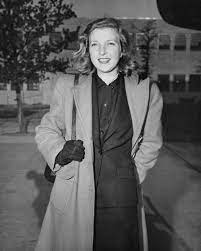
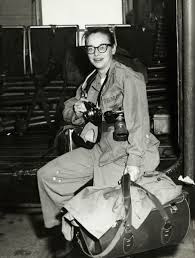
However, there was one industry that seemed to have no shortage of men: journalism. Nearly every newspaper and magazine in the U.S. from tiny weekly periodicals to national publications employed a man who covered the conflict on location. In order to be allowed in a war zone, a reporter had to be accredited. Accreditation was a long, tedious process, but by the end of the war over 1,473 men and 127 women had achieved that coveted status. 

Photo: WikiImages
Despite their approval, many female correspondents faced scorn, derision, and opposition in the form of refusal to transport them to the front, as was part of the “deal” of being accredited. Instead, they had to coerce, bribe, or charm their way onto jeeps, trucks, or ships. Collier’s journalist Martha Gellhorn wrote in a letter to military authorities, “I have too frequently received the impression that women war correspondents were an irritating nuisance. I wish to point out that none of us would have our jobs unless we knew how to do them, and this curious condescending treatment is as ridiculous as it is undignified.” 

Photo: WikiImages
Unable to get to Normandy on D-Day any other way, Gellhorn stowed away on a hospital ship. When told by one hard-nosed general that he didn’t want his Marines to have to pull up their pants because she was around Dickey Chappelle responded, “That won’t bother me one bit. My object is to cover the war.” And ex-fashion photographer Lee Miller managed to make her way to Dachau where she captured pictures of the camp’s liberation. These women the other 124 correspondents exhibited grit and grace to get the job done. 

My WWII mystery, Under Fire, features War Correspondent/Amateur Sleuth Ruth Brown. It is my hope that her story will honor those correspondents who forged the trail for future generations of women who can now choose to do or be anything they want.

 _________________ 

Under Fire


Set in April 1942, Under Fire tells the story of Ruth Brown whose missing sister jane is declared dead. Convinced her sister is still alive, Ruth follows clues from her small New Hampshire town to war-torn London trying to find her. Discovering that Jane has been murdered results in a faith crisis for Ruth, and she decides she must find Jane’s killer. During her search for the culprit, she runs into smugglers, resistance fighters, and the IRA, all of whom want her dead for what she knows.

Monday, June 13, 2022

Mystery Monday: 1800s Mysteries

Mystery Monday: 1800s Mysteries 

Photo: WikiImages
Think Louisa May Alcott, and her book Little Women springs to mind. But you’ll probably be surprised to discover that long before she wrote the young adult classic, she made her living writing gothic and mystery stories. 

Born in 1832, she was raised in New England (primarily Massachusetts) by transcendentalist parents, her upbringing didn’t include a lot of formal education. Primarily homeschooled, Louisa had to go to work in her teens because of her family’s financial straits. However, her parents’ friends included such literary greats as Ralph Waldo Emerson, Nathaniel Hawthorne, Henry David Thoreau, and Henry Wadsworth Longfellow, so she was able to learn from the masters. 

Not unusual for the time, she published under the pen name A.M. Barnard. Her stories have been described as “lurid” and “sensational.” Her novels focused on passion and revenge. Hard to believe after reading Little Men and Jo’s Boys. However, these books were highly popular and she received critical success during the 1860s. 

She signed up for a three-month period to serve as a nurse at the Union Hospital in Georgetown, Washington, DC during the Civil War, but had to quit after six weeks because of contracting typhoid. In 1863, she published Hospital Sketches based on letters she sent home during her time as a nurse. 

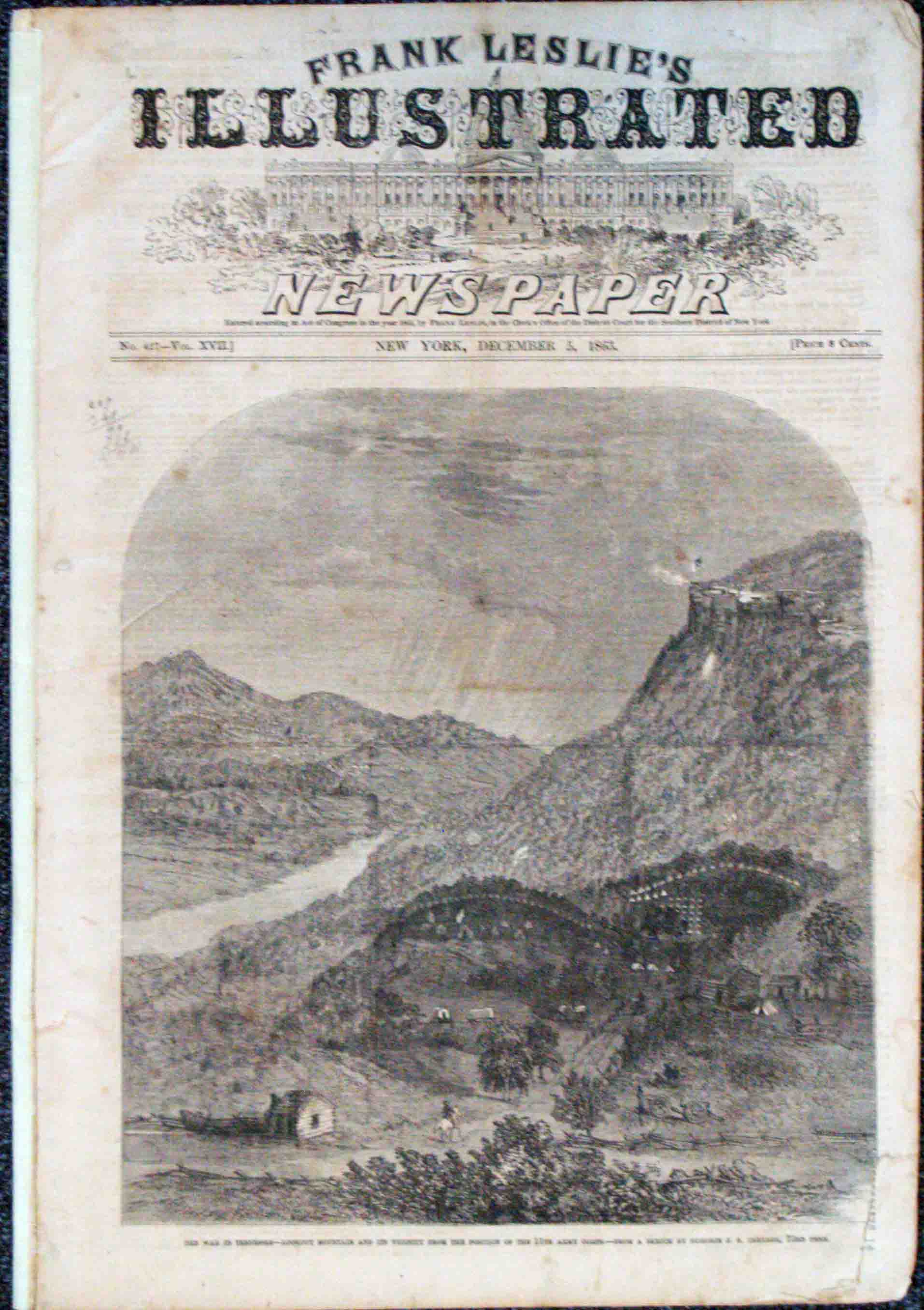
That same year she won the $100 prize from Frank Leslie’s Illustrated Weekly (a periodical purported to be similar to the National Inquirer “minus the TV and movie celebrities,” for the short story Pauline’s Passion and Punishment. Described by one commentator as “mild stuff if read from the perspective of a 21st-century reader,” the story is one of love, anger, and betrayal. Goodreads states, “The beautiful Pauline has been wronged and sets about getting a little of her own back. Collateral damage ensues in this tale of revenge and its consequences.” Despite the themes, the author managed to keep offensive material out of the story. 

The plot is simple: Pauline is jilted by her beloved Gilbert who leaves her for a wealthy heiress. As a result, Pauline plans revenge by marrying a nice young man named Manuel. As Manuel is in love with her, he agrees to the marriage even after she informs him of her motive to make Gilbert jealous and remorseful. Her plan works, and her former beau is desperate to win her back even though he is married. In a bit of irony, Manuel meets and grows close to Gilbert’s wife. Pauline manipulates those around her to carry out her wishes, creating chaos and tragedy. The consequences are severe, but she’ll stop at nothing until Gilbert has felt the same pain she did. I

In many ways, the ending is a surprise, but in others typical of Alcott’s writings. It is available for free in many places including the Gutenberg project, so you can read it for yourself. 

 ___________________ 

Ellie's Escape

She’s running for her life. He needs a trophy wife. They didn’t count on falling in love. 

Ellie Wagner is fine being a spinster school teacher. Then she witnesses a bank hold up and can identify the bandits. Fellow robbery victim Milly Crenshaw happens to run the Westward Home & Hearts Matrimonial Agency so she arranges for Ellie to head West as a mail-order bride. But her groom only wants a business arrangement. Can she survive a loveless marriage? 

Banker Julian Sheffield is more comfortable with numbers than with people, but he’s done well for himself. Then the bank president tells him that in order to advance further he must marry in six weeks’ time. The candid, unsophisticated woman sent by the agency is nothing like he expected, but time is running out. When her past comes calling, does he have what it takes to ensure their future?

Friday, June 10, 2022

Forensic Friday: Crime-solving in the Old West

Crime Solving in the Old West 

Photo: Pixabay/Master Tux
Intriguingly, ballistics science has been around since the 1500s. How was this possible? Very easily, as it turns out. Before guns were mass-produced, each weapon was handmade, allow the bullet fired to be identified because of “rifling” on the bullet – the lines and scratches made by the barrel. The first documented case occurred in 1835 in London. Police were able to get a conviction when they matched the bullet found at the murder scene to the suspect’s gun. 

Unfortunately, when manufacturing replaced hand tools, this comparison was no longer possible. However, an earlier case was the conviction of John Tom in 1784 because the paper wadding removed from the victim’s wound matched paper found in the suspect’s pocket. 

What about fingerprints? 

Photo: Pixabay/
Emilion Robert Vicol
It turns that Italian scientist Marcello Malpighi recognized fingerprint patterns way back in 1685, coining the terms loops and whorls that are still used today. It wouldn’t be until 1823 that Johannes Purkinje, a Czech physiologist, would develop a rudimentary fingerprint classification system. Nearly sixty years later, Scotch doctor, scientist (and missionary!) Henry Faulds showed that dusting with powder would expose latent fingerprints. 

Three years later in 1883, author Mark Twain used fingerprint identification in his books Life on the Mississippi and The Tragedy of Pudd’nhead Wilson. Scotland Yard wouldn’t replace anthropometry with a fingerprint identification system for another eighteen years in 1901. Two years would pass until the US would implement the first systematic use of fingerprints for criminal identification in the New York State prison system. 

Photo: Pixabay/succo
Forensics inched forward during the 1800s as methods were devised to detect poisons, but two important discoveries rocked the scientific world when Karl Landsteiner designated the ABO blood typing system and Paul Uhlenhuth created a method to distinguish between human and animal blood. But perhaps the biggest progression was the 1923 case Frye v. United States that set standards for admission of scientific evidence in US courtrooms, a common occurrence now, but unusual at the time. 

Without the ability to use science in the Old West, lawmen and attorney were “stuck” using other means to prove their cases.

 ____________________ 

She’s running for her life. He needs a trophy wife. They didn’t count on falling in love. 

 Ellie Wagner is fine being a spinster school teacher. Then she witnesses a bank hold up and can identify the bandits. Fellow robbery victim Milly Crenshaw happens to run the Westward Home & Hearts Matrimonial Agency so she arranges for Ellie to head West as a mail-order bride. But her groom only wants a business arrangement. Can she survive a loveless marriage? 

Banker Julian Sheffield is more comfortable with numbers than with people, but he’s done well for himself. Then the bank president tells him that in order to advance further he must marry in six weeks’ time. The candid, unsophisticated woman sent by the agency is nothing like he expected, but time is running out. When her past comes calling, does he have what it takes to ensure their future?

Thursday, June 9, 2022

Talkshow Thursday: Welcome Chris Posti!

Talkshow Thursday: Welcome Chris Posti

Linda: Welcome to my blog! Congratulations on your debut novel, Falling Apart, Falling for You. It sounds fantastic. Where did you get your inspiration for the story? 

Chris: Chairing my own 45th high school reunion served as the germ of the story, but of course, the Lord provided every single word and idea. 

LM: What sort of research was required for the book? 

Chris: The novel’s setting is near my home, and it’s a contemporary story, so except for looking up where “red-dog” driveway stone came from (the coal mines), there was no need for research. 

LM: How did your former career as a career executive coach, newspaper columnist, and radio show host prepare you to be an author? 

Chris: Writing a novel requires a vivid imagination, and the more experiences an author has to draw from, the easier it gets. In my case, I was fortunate to have had the opportunity to interact with people from all levels in business and from all walks of life. These experiences enabled me to make my characters more realistic. 

LM: You’ve also written two non-fiction books. How was writing a novel different? The same? 

Photo: Pixabay/
Dariusz Sankowski
Chris: Writing a novel is much, much, much harder! Nonfiction is factual; the information can be arranged in a variety of ways. The writing is simpler, with fewer constraints. Fiction requires so much more from the author – I had no idea how difficult the transition would be! I spent hours reading comps and books on craft, listening to podcasts, and attending webinars and conferences. Then the real work began: applying what I’d learned! 

LM: What advice do you have for fledgling writers? 

Chris: First, learn as much as you can. Before beginning your story, write your logline and synopsis. This will save you much time, pain, and suffering later on. 

LM: Here are some quickies: 

Chris:
Favorite childhood book: Harold and the Purple Crayon 

Favorite Bible verse: Romans 12:2 “Do not conform any longer to the pattern of this world, but be transformed by the renewing of your mind. Then you will be able to test and approve what God’s will is—His good, pleasing and perfect will.” 

Photo: Pixabay/
SophieLayla Thal
Favorite place to vacation: I was raised in Pennsylvania, but I’ve also lived in Lausanne, Switzerland, and Carmel, California, and I’ve traveled much more than most. At this point in my life, I am content to stay put—except I would like to return to Poland, where I was once able to visit some of my relatives. I would love to see my cousin again! 

LM: What other projects are on the docket for you this year? 

Chris: At the moment, I’m deep into the promotion of Falling Apart, Falling for You, and later in 2022, I expect to write the second book in this series of three. 

LM: Where can folks find you on the web? 

Chris: My book website is https://chrisposti.com/. 

About Falling Apart, Falling for You: 

With their lives in a free fall, three women gather for their 40th high school reunion in tiny Port Mariette, Pennsylvania. At 57, is it too late for them to make a fresh start? 

Suzanne 
After spending most of her adult life working as a traveling trainer for an airline, untethered and mildly content, Suzanne feels a stirring in her heart for a seemingly perfect guy. But when she abruptly loses her job, she lands in surprising new territory. 

Rachel 
Seeking distraction in the wake of her husband’s sudden passing, Rachel helps organize her class’s first reunion in 40 years. Stunned by an old friend’s shocking secrets, she struggles to learn forgiveness as she tiptoes into her new-found freedom. 

Marla 
After selling her thriving business, Marla revisits high school friendships and her mysterious past. Seeking family and a renewed purpose, she adds her marketing expertise to the group’s strategy for revitalizing the blue-collar town that brought them back together.

Purchase Links:

Wednesday, June 8, 2022

Western Wednesday: Medicine in the Olden Days

Western Wednesday: Medicine in the Olden Days 

Photo: Pixabay/Steve Buissinne
Got a headache? Grab some aspirin or other pain reliever. How about bronchitis or strep throat? The doctor will give you a prescription for an antibiotic. But it hasn’t been that long since an infection, even a minor one, could conceivably kill its victim. Penicillin was accidentally discovered in 1928, but it would be nearly twenty years before the drug was fully developed and available on a wide scale (thanks mostly to the need generated by WWII). 

So what did folks do before modern drugs? 

Medicine in the 1700s: 
  • Headaches, dropsy (swelling), and stomach pains: teas infused with lavender, rosemary, wormwood, sage, foxglove, and mint. 
  • Fever: Wine “sharpened with lemon juice” or water gruel, orange whey, or weak chamomile tea 
  • Bleeding was also a popular “cure” that often created more problems than it solved!

1800s: 
  • Itchy skin and/or infection prevention: Camphor 
  • Diarrhea: Opium. 
  • Arthritis: Apple pectin mixed into juice. 
  • Insect stings: Honey 
  • Burns: Cloths soaked in tea
  • Indigestion: baking soda solution
  • Coughs (and many other ills): Castor oil 
  • Sore throat: Saltwater gargle (still used today!) 
Pixabay/Terri Cnudde
Then there were solutions for “female problems” such as motherwort tea to “calm the nerves.” Painful menstruation was treated with a tea made from red raspberry leaves. This was also thought to cure infertility. Labor pains were treated with blue cohosh and menopause with black cohosh. Fainting spells were treated with a tablespoon of vinegar. Calendula tea was used to cure bladder infections, and chamomile tea was used as a cure-all for everything from menopause to insomnia. 

A frightening “cure” that was part of medicine for nearly five hundred years was mercury. Thought to rejuvenate the body, it was most popular for sexually transmitted diseases such as syphilis. Unfortunately, it eventually caused deformities before killing the patient. 

Another common remedy was a mustard poultice. Used for chronic aches and pains as well as to ease chest congestion, the poultice (a soft moist mass) was made from mustard seed powder spread inside a protective dressing. The key was not to leave it in place for too long because it could cause first-degree burns! The vapor could cause nausea. Other poultices were created with dried crumbled bread mixed with sweet milk. Sometimes egg whites, crushed boiled onions, cornmeal or wheat bran were added. 

Pixabay/ArtActiveArt
The wife/mother was typically responsible for the health of the family, and many eventually learned the healing properties of the various herbs native to their location. It is debatable whether the home herb garden or vegetable garden was more important. I can’t imagine having to crush, cook, or infuse my medicine all the while wondering if it would work. 


 ___________________ 


She’s running for her life. He needs a trophy wife. They didn’t count on falling in love. 

Ellie Wagner is fine being a spinster school teacher. Then she witnesses a bank hold up and can identify the bandits. Fellow robbery victim Milly Crenshaw happens to run the Westward Home & Hearts Matrimonial Agency so she arranges for Ellie to head West as a mail-order bride. But her groom only wants a business arrangement. Can she survive a loveless marriage? 

Banker Julian Sheffield is more comfortable with numbers than with people, but he’s done well for himself. Then the bank president tells him that in order to advance further he must marry in six weeks’ time. The candid, unsophisticated woman sent by the agency is nothing like he expected, but time is running out. When her past comes calling, does he have what it takes to ensure their future?