Showing posts with label #oldwest. Show all posts

Thursday, October 2, 2025

Talkshow Thursday: Welcome Janalyn Voight

When Mail Took Weeks and 
Coffee Was Gold: Life in the Old West
By Janalyn Voigt, Guest Author

Ever wish you could time-travel to the Old West? I used to imagine it as a land of wide skies, brave hearts, and the kind of adventure that makes your pulse quicken. But as I dug into the real history while writing the Montana Gold western romance series, I discovered life back then was a mix of grit, gumption, and just enough grace to keep going.

Let’s set the scene.

No Amazon Prime, No Problem?

In the 1880s Montana Territory, a letter could take weeks to arrive—if it made it at all. Roads were dusty (or muddy) tracks. Stagecoaches bounced over ruts, stopping at waystations where you might be greeted with strong coffee and stronger opinions. If you wanted fabric for a new dress or parts for your plow, you sent away to a catalog and waited. Patience wasn't just a virtue—it was survival.

I’ve always admired the kind of woman who could manage a homestead, cook over an open fire, keep
her family clothed and fed, and still have the backbone to fight for what’s right. Women like that inspired characters such as America Reed, the resourceful heroine of Hills of Nevermore (Book 1 in the Montana Gold series). America flees a troubled past and finds herself in a rough gold rush town, facing the wild unknown without the certainty of God’s love. Shane Hayes, a blue-eyed circuit preacher with more gumption than caution, makes it his mission to set her straight.

The Gold Rush That Wasn't Quite

Speaking of gold, Montana's gold rush didn’t exactly play out like a Hollywood western. Sure, there were strikes like the one at Alder Gulch in the 1860s and stampedes of hopeful miners, but few struck it rich. Most ended up laboring to get by—or else moved on to the next big rumor of gold. The sense of transience this brought made the region volatile, but also full of opportunity for those brave (or desperate) enough to grab it.

I used that tension in Cheyenne Sunrise (Book 2), where a widow and a half-Cheyenne trail guide find themselves thrown together on a journey north. The unsettled land mirrors their own emotional landscapes—rugged, unpredictable, but with breathtaking beauty and unexpected grace.

Real Love in a Harsh Land

Romance might not be the first thing you associate with frontier life, but love stories were written every day—in shared hardships, small acts of kindness, and the kind of loyalty born from struggle. I like to think my stories echo those quiet, enduring romances. They remind us that even in hard times—maybe especially in hard times—people hold onto hope.

Take Stagecoach to Liberty (Book 3). Imagine traveling through mountain passes with strangers, only to discover one of them might hold the key to your past—and your future. Talk about a surprise. I wove real details about stagecoach travel into the story, from the grueling pace to the ever-present danger of bandits, breakdowns, and other perils.

Why I Keep Writing About the West

I write western historical romance not just for the swoon-worthy cowboys (though let’s be honest—they
don’t hurt). I write it because there’s something timeless about the resilience, faith, and community of the Wild West.

If that’s the kind of story you like too, I invite you to saddle up and ride into the pages of Montana Gold. Each book blends historical truth with heartfelt romance and just enough danger to keep you turning the pages.

Thanks to Linda Matchett for letting me stop by History, Hope, & Happily Ever After. It’s a joy to connect with readers who love history as much as I do!

Happy trails,
Janalyn Voigt
Let's connect: www.janalynvoigt.com

Thursday, December 5, 2024

Talkshow Thursday: Welcome Donna Wichelman!

Talkshow Thursday: 
Welcome Donna Wichelman!

I'm thrilled to be hosting fellow Heroes, Heroines, and History blogger, Donna Wichelman. Have you read her books? They're fantastic! Draw up a chair and hear about her inspiration and research.

How Staying True to History and Culture Gives Authenticity to Your Novel

My appreciation for history developed in childhood, because my parents traveled across the United States and Canada almost every summer to visit family. Even then, our travels sparked my imagination. As an adult, I’ve continued to find fascination in developing stories from learning about a place’s history and culture. I conceived A Song of Deliverance while standing on a crest overlooking the Atlantic Ocean near Dingle, Ireland and envisioning a poor woman in nineteenth-century Ireland destined to emigrate to America. This inkling of a story birthed a full-length novel that I needed to flesh out when I returned to Colorado, because only through research would history make the story come alive on the page.

Research is the backbone of historical fiction and lends authenticity to the story. An author may have developed a lovely romance between two people or an exceptional plot line during the Victorian era. But the story falls apart if the language doesn’t ring true to the people of that time or if the mining technology, as in A Song of Deliverance, is too sophisticated for the period.

It’s essential to ensure the details of place, setting, people, and culture stay as true to the period as possible. I spend several weeks sifting through source materials and continue researching throughout the writing phase. If a reader looked at my first draft of A Song of Deliverance and compared it to the book as it appears today after its release, she would notice the differences in language, cultural norms, and the historical people who populated the town in 1870s Georgetown, Colorado.

Several years ago, I realized that every story concept I developed had some component of history in it.
Courtesy Colorado Women's Hall of Fame
Even the two romantic suspense novels in my Waldenisian series, indie-published in 2015 and 2018, contain a mega dose of history about the pre-reformation Christian sect. But I didn’t want my stories to be dull and dry textbooks. I wanted them to weave history and faith into stories of intrigue and redemption to give substance to the story. The real-life story of Clara Brown stands out as bringing such a character to life.

As a formerly enslaved woman, Clara Brown’s owner released her at his death before the Civil War. She came to Colorado in 1859, saved the earnings from cooking, laundering, and birthing babies, and invested in local mines. People knew her as “Aunt” Clara for her Christian charity. Clara was inducted into the Colorado Business Hall of Fame on January 27, 2022, for being the first black woman entrepreneur in Colorado. Her character influenced the woman I created in my book, Cecelia Richards, whose wisdom and faith shone a bright light on my protagonist Anna Sullivan’s life.

I set out to make A Song of Deliverance more than a story about one poor Irish woman’s road from rags to riches. Anna’s story is about finding the faith and courage to persevere despite the most tragic circumstances and discovering God has never been farther than a hair’s breadth away. As Anna’s formerly enslaved friend Cecelia says at one point in the book, “I reckon we all got shackles we need to get freed from to get by in this world.” This essence is what author and theologian Jerry Sittser calls the “spirit of the story.”

Pixabay/congerdesign
Recently, I’ve become fascinated by a genre called slip-time, where two timelines with two protagonists weave together through a common thread. Many of the books I’m currently reading are slip-time, because I have a World War Two slip-time project in the development stages.

Books I’m reading include The Legacy of Longdale Manor, a Carol award winner by Carrie Turansky; Catching the Wind, a Christy finalist by Melanie Dobson; and Whispers From Yesterday, winner of the 2000 Christy Award by Robin Lee Hatcher. I’ve also read Book Four in Amanda Cabot’s historical romance Sweetwater Crossing series, One Special Christmas, and Crystal Caudill’s recent Christy award-winning novella, Star of Wonder.

About Donna:

Weaving history and faith into stories of intrigue and redemption grew out of Donna’s love of travel, history, and literature as a young adult while attending the United World College of the Atlantic—an international college in Wales, U.K. She enjoys developing plots that show how God’s love abounds even in the profoundly difficult circumstances of our lives. Her stories reflect the hunger in all of us for love, belonging, and forgiveness in a world that often withholds second chances.

Donna received her master’s degree in mass communications/journalism from San Jose State University and became a communications professional before writing full-time. Her short stories and articles have appeared in inspirational publications. She has two indie-published Christian romantic suspense novels in her Waldensian Series, Light Out of Darkness, Book One, and Undaunted Valor, Book Two. Her Gilded Age historical romance, A Song of Deliverance, just released on December 3, 2024

Donna and her husband of forty years participate in ministry at their local church in Colorado. They love spending time with their grandchildren and bike, kayak and travel whenever possible.

About A Song of Deliverance

Born into the Irish system of land-holding that favors the moneyed class, Anna Sullivan has no dowry and no chance of marrying the man she loves. Poor and heartbroken, she flees Ireland to tend to Uncle Liam’s house in Colorado and take on her deceased aunt’s sewing business.

But when Anna arrives in Georgetown, she discovers a mine disaster at the Singing Silver Mine has killed her uncle. Orphaned and destitute again, she gathers her faith, courage, and ingenuity to establish a life in the community. Only one person stands in her way—the mine’s owner.

A wealthy, grief-stricken widower of European nobility, Stefan Maier threw his energies into making his mark as a silver mining baron in Colorado when his wife and child died at sea, emigrating to America. Now, everyone blames him for the mine disaster that killed nine men. But how does he convince the lovely and opinionated Irish woman of his innocence?

Will Anna’s heart soften towards Stefan? Will Stefan prove himself worthy of Anna’s affections? Each will have to risk everything to attain what they want and need most—love.

Wednesday, August 9, 2023

Wayback Wednesday: 1875

Wayback Wednesday: 1875

Pixabay/Flash Alexander
I’m thrilled to be releasing another story in the Westward Home & Hearts Mail Order Brides series. Beryl’s Bounty Hunter will be out on the 15th of this month. The story is set in the fictional town of Rocky Mountain Springs, Wyoming in 1875. I thought it would be fun to explore what life was like during that year.

Only ten years had passed since the end of the American Civil War. The Reconstruction Era was in full swing and would come to an uneasy conclusion with the Compromise of 1877. Despite the passing of the 13th, 14th, and 15th amendments race relations remained strained, and America continued to treat the Native Americans poorly. An incident in February of that year involved the marching of the Yavapai and Tonto Apache tribes being forced to march at gunpoint from Arizona’s Verde Valley to the San Carlos Apache Indian Reservation. The following month saw the passage of the Page Act which restricted the immigration of Chinese women to the US.

Out west, farmers and ranchers were dealing with “Albert’s Swarm,” a cloud of Rocky Mountain
Pixabay/
Dominic Alberts
locusts estimated to be 198,000 square miles (1/3 of the size of Alaska) in size. Named for meteorologist Albert Child who calculated the size of the horde, the locusts struck western Missouri devastating everything in its path as it headed for Nebraska. I remember when the 17-year locusts hit Maryland {shudder,} and it was a fraction of the experience for those poor settlers.

On a brighter note, the thoroughbred Aristides won the first Kentucky Derby, Harvard and Tufts played what is considered the first college football game, and Boston was privy to Tchaikovsky’s first performance of his Piano Concerto No. 1.

Pixabay/
Aleksejs Ivanovs
Technology was moving the world ahead with the invention of Alexander Graham Bell’s telephone (he received the patent in 1876), the mimeograph machine by Thomas Edison, albeit as a mistake while trying to improve telegraphy tape, and the electronic dental drill by little-remembered George F. Green. In Europe, German inventor Siegfried Marcus received a patent for an internal combustion engine.

The transcontinental railroad had been completed in 1869, and people took the ease of crossing the nation for granted, much like we take air travel for granted today. Thirty-seven states existed, and Colorado would join the Union the following year. The nation was headed for its Centennial, and spirits were high as the country entered the Gilded Age which lasted more than thirty years.

______________________

Beryl’s Bounty Hunter

Can a thief and a lawman find happiness?


Orphaned as a child, Beryl Atherton has lived on the streets of London as long as she can remember. Reduced to stealing for survival, she is arrested. During her incarceration one of her cellmates shows her a newspaper ad for an American mail-order bride agency. But all is not as it seems, and moments after landing in Boston, she must run for her life. Will things be no different for her in the New World?

Working as a bounty hunter since The War Between the States, Lucas Wolf just needs a few more cases before he can hang up his gun, purchase a ranch out West, and apply for a mail-order bride from the Westward Home & Hearts Mail-Order Bride Agency. While staking out the docks in Boston, he sees a woman fleeing from the man he’s been tailing. Saving her risks his job. Not saving her risks his heart.

Pre-order Link: https://amzn.to/3KqprHW

Thursday, February 23, 2023

The History in Historic Novels with Marisa Masterson

Talkshow Thursday: Marisa Masterson
The History in Historic Novels 

It’s only a romance. Why include all those historical details?


Yes, people really do say things like that to me. Let me share with you my reason for including historical facts in my book Priscilla’s Piggy.

To me, historical details are essential to the book. I want the reader to feel as if she is in the past, to let the setting become real for the reader. This meant returning again and again to my research about the Battle of Little Bighorn as I wrote about my hero’s nightmares and time in the 7th Cavalry. That was something referred to as “total war”. That means men like my hero probably killed women and children and burned villages. Would they have become hardened to the sight of death? How would their type of experiences affect a man’s faith in God?

Those details from Jack Dixon’s experience when he and his squad discovered the nude bodies of
Custer and his men create part of the conflict in this book. Once the heroine decides she will marry Jack, things still aren’t perfect. All because he suffers from violent nightmares after taking part in the Sioux War.

While he and Priscilla, the heroine, want to be married and have a family, they are unsure how his horrific dreams can be overcome. This throws up a roadblock to the relationship. After all, how can she even share a bed with him? Also, she’s a believer. If his faith is so crippled, should she marry him?

Would this be as believable without the details? I don’t think so. Take this excerpt from the novel, for example:

“You heard my nightmare, didn’t you?”

His wife lifted the covers and moved close to him. He set the candle on the bedside table and clung to her. She nearly jumped when his whisper cut through the heavy quiet. “It was terrible, Priscilla. Worse than anything I’d seen.”

“What?”

“Custer and his men. They were stripped. Some had lost heads or arms.” He stopped speaking, stiffening next to her.

She lifted a hand to his cheek. “Ears.”

“Yes, ears.” A sob rumbled in his chest. “It should have been all of us. We’d raided villages. The order was to kill everyone. Total war.”

He broke down. Sobs shook him as he hugged her to him. Priscilla wanted to shush him. Instead, she let him cry as she prayed.

Under the blankets, his hand found hers. “I shouldn’t have married you, but I couldn’t live if you weren’t with me.”

Do historical details bog down a novel? Too many, yes. A smatter in just the right spot are a must in historical romance.


Friday, June 10, 2022

Forensic Friday: Crime-solving in the Old West

Crime Solving in the Old West 

Photo: Pixabay/Master Tux
Intriguingly, ballistics science has been around since the 1500s. How was this possible? Very easily, as it turns out. Before guns were mass-produced, each weapon was handmade, allow the bullet fired to be identified because of “rifling” on the bullet – the lines and scratches made by the barrel. The first documented case occurred in 1835 in London. Police were able to get a conviction when they matched the bullet found at the murder scene to the suspect’s gun. 

Unfortunately, when manufacturing replaced hand tools, this comparison was no longer possible. However, an earlier case was the conviction of John Tom in 1784 because the paper wadding removed from the victim’s wound matched paper found in the suspect’s pocket. 

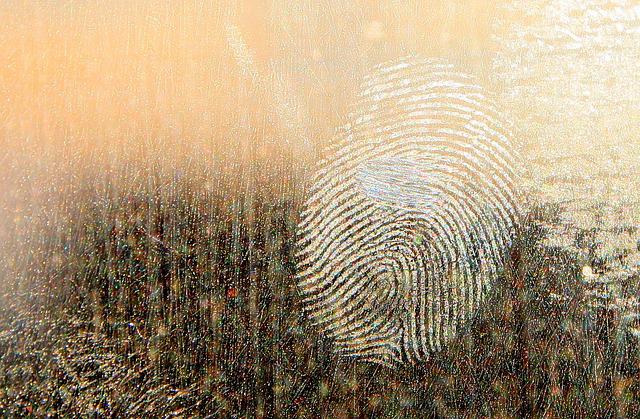
What about fingerprints? 

Photo: Pixabay/
Emilion Robert Vicol
It turns that Italian scientist Marcello Malpighi recognized fingerprint patterns way back in 1685, coining the terms loops and whorls that are still used today. It wouldn’t be until 1823 that Johannes Purkinje, a Czech physiologist, would develop a rudimentary fingerprint classification system. Nearly sixty years later, Scotch doctor, scientist (and missionary!) Henry Faulds showed that dusting with powder would expose latent fingerprints. 

Three years later in 1883, author Mark Twain used fingerprint identification in his books Life on the Mississippi and The Tragedy of Pudd’nhead Wilson. Scotland Yard wouldn’t replace anthropometry with a fingerprint identification system for another eighteen years in 1901. Two years would pass until the US would implement the first systematic use of fingerprints for criminal identification in the New York State prison system. 

Photo: Pixabay/succo
Forensics inched forward during the 1800s as methods were devised to detect poisons, but two important discoveries rocked the scientific world when Karl Landsteiner designated the ABO blood typing system and Paul Uhlenhuth created a method to distinguish between human and animal blood. But perhaps the biggest progression was the 1923 case Frye v. United States that set standards for admission of scientific evidence in US courtrooms, a common occurrence now, but unusual at the time. 

Without the ability to use science in the Old West, lawmen and attorney were “stuck” using other means to prove their cases.

 ____________________ 

She’s running for her life. He needs a trophy wife. They didn’t count on falling in love. 

 Ellie Wagner is fine being a spinster school teacher. Then she witnesses a bank hold up and can identify the bandits. Fellow robbery victim Milly Crenshaw happens to run the Westward Home & Hearts Matrimonial Agency so she arranges for Ellie to head West as a mail-order bride. But her groom only wants a business arrangement. Can she survive a loveless marriage? 

Banker Julian Sheffield is more comfortable with numbers than with people, but he’s done well for himself. Then the bank president tells him that in order to advance further he must marry in six weeks’ time. The candid, unsophisticated woman sent by the agency is nothing like he expected, but time is running out. When her past comes calling, does he have what it takes to ensure their future?

Wednesday, May 11, 2022

Western Wednesday: Shopping in the Old West

Western Wednesday: Shopping in the Old West

Photo: Pixabay/
Sabrian Eickhoff
What do you think of when you hear the term “Old West?” Probably cowboys or ranches. Maybe saloons. But one mainstay of life in the towns that sprang up across the country during the 1800s is the general store, also known as a mercantile. Unlike the cities of the time that featured specialized boutiques, these small hamlets were remote, serving a population that had little time for shopping and often limited funds. 

The goal of the general store was to provide whatever the locals needed. Patrons could find tobacco, cigars, hardware, jewelry, buggy whips, horse tack, lanterns, pails, foodstuffs, fabric and sewing notions, household items, tools, small farm implements, soap, crockery, dishes, guns and bullets, clothing, candy, coffee, toiletries, school supplies such as slates and chalk, and patent medicines (most of which were untested and alcohol-based!). 

Merchandise could be purchased with cash or barter items, such as milk, eggs, or surplus produce. Shopkeepers also extended credit as necessary. In 1853, customers could expect to pay eight to ten cents per pound for rice, eleven cents per pound for pork versus nine cents per pound of salt beef. Fresh beef could be had for five cents per pound, whereas lard would run them up to twelve cents per pound. 

Many general store owners began as roving peddlers. After accumulating enough capital and inventory, they would establish a permanent location in a growing settlement. Others specifically sought one of the boomtowns such as a mining camp or railroad town. Sometimes, the mercantile would be the first business in a new settlement. 

Photo: Pixabay/
Brigette Werner
In addition to providing for the physical needs of the community, the general store was often the social center. A collection of chairs encircled the massive woodstove that was often located in the middle of the store. Some merchants offered inexpensive snacks such as soda crackers to allow folks to “sit a spell.” In his book, Pill, Petticoats, and Plows: The Southern Country Store, Thomas Clark indicated “Fox races, tobacco, cotton, horses, women, politics, religion—no subject is barred from the most serious and light-hearted conversation.” 

As the communications center of the town, the general store was typically the location of the post office with the owner acting as postmaster, sometimes even town clerk, Justice of the Peace, and/or undertaker. In later days, the mercantile was the first or only place in the town with a telephone. Less formal communication included a wall filled with lost and found notices, event flyers, election information, auctions, and “wanted posters” for outlaws. 

Keeping the shop clean would have been a challenge. With unpaved roads, customers tracked in dirt and other detritus, and the wood stove produced soot that settled on the goods. One report I found indicated it was not unusual to discover rodents foraging inside the store. 

Photo: Pixabay/
flockine
The late 1800s saw the advent of the mail order catalog business with Tiffany’s Blue Book considered the first in the U.S. In 1872, Aaron Montgomery Ward sent out his first “catalog,” a single sheet of paper showing merchandise for sale and including ordering instructions. Twenty years later, he was sending out a 540-page illustrated book selling 20,000 items, including prefabricated kit houses. Sears followed in 1888, and the decline of the general store began. The coming of the automobile in 1910 gave farmers and ranchers greater mobility, and as towns grew in size, the population was able to support specialized shops. 

There are remnants of general stores scattered around the U.S., and you may be pleasantly surprised to find one near you.

This article is a reprint of a guest post I did in February 2021. 

__________________

Gold Rush Bride Tegan

She’s out to prove herself. He’s only looking for adventure. Neither one realizes they’ll find more than gold “in them thar hills.” 

Tegan Llewellyn has always been different than her adopted family, except Grandmother Hannah, a prospector during the 1829 Georgia gold rush. Now, seventy years later there are reports of gold in Nome, and the opportunity is too good to pass up. But Tegan doesn’t count on the dangers that strike from the moment she steps off the steamer, including the threat of losing her heart. 

Elijah Hunter has prospected for gold all over the US and Canada and likes being on the move. The last thing he expects to find on his latest search is a lady miner who proves to be nothing but trouble. Can he convince her that leaving is for her own good before it’s too late...for both of them?

Wednesday, April 13, 2022

Western Wednesday: Communication in the Old West

Western Wednesday: Communication in the Old West 

Photo: Pixabay/Jan Vasek

I’m not the most savvy of technology users, and I was a long holdout on getting a smartphone. Unsurprisingly, the need to keep up with and communicate with family was the impetus for my upgrade. Texting was excruciating on my tiny flip phone, and there was no ability to send or receive photos. 

Westward expansion after the American Civil War sent hundreds of thousands of people across the nation. Some fled to escape the horrors of the war, others because they lost their homes. A great number craved adventure. Whatever their reasons, individuals packed what would fit in a covered wagon, paid their fees to the trail boss, and set out for a new life. More than a few left behind family, and telephones wouldn’t become commonplace for decades. 

How did pioneers keep in touch? 

Photo: Pixabay/Ellen26
The most common way settlers communicated with their loved ones was through the mail service. Created in 1792 with the Postal Service Act, the US Postal Service was originally part of the federal government, then elevated to a cabinet-level department in 1872. It would not become an independent agency until the Postal Reorganization Act of 1970. 

Until 1851, mailing letters through the Postal Service was an expensive proposition and did not serve many areas of the country. Additionally, there was no “regular delivery. As a result, most people used private means. Sometimes it was as easy as giving the letter to a friend, relative, business associate, or even stranger who was “heading that direction.” Another means was to hand the correspondence to the captain of a ship (Law required them to deliver all mail to the nearest post office at the first port of entry, but research indicates that didn’t always happen.) 
 
Stagecoaches were another avenue to send correspondence. In addition to people, they carried, bags, packages, and letters. Before 1810, stagecoaches were allowed to carry letters unless the route had been designated by Congress as a post road. After the Postal Act of 1810, it was unlawful for stages to carry mail on a post road or road adjacent to a post road. However, some drivers continued to offer the service. 
 
Photo: Public Domain
Private express companies (the forerunners to UPS/FedEx, etc.) were often used to carry money, packages, and legal documents, but were also known to convey letters. Until the Pony Express which delivered in ten days, then later through the use of trains, letters could take weeks, if not months to travel across the country. The telegraph was invented in 1844, but was expensive and only used in cases of emergencies. Early settlers would be amazed at the thought of cell phone usage that crosses oceans. I know I am. 

_____________________

Ellie’s Escape 

She’s running for her life. He needs a trophy wife. They didn’t count on falling in love. 

Ellie Wagner is fine being a spinster school teacher. Then she witnesses a bank hold up and can identify the bandits. Fellow robbery victim Milly Crenshaw happens to run the Westward Home & Hearts Matrimonial Agency so she arranges for Ellie to head West as a mail-order bride. But her groom only wants a business arrangement. Can she survive a loveless marriage? 

Banker Julian Sheffield is more comfortable with numbers than with people, but he’s done well for himself. Then the bank president tells him that in order to advance further he must marry in six weeks’ time. The candid, unsophisticated woman sent by the agency is nothing like he expected, but time is running out. When her past comes calling, does he have what it takes to ensure their future?

Wednesday, December 22, 2021

Western Wednesday: Christmas in the Old West

Western Wednesday: Christmas in the Old West 
 
Photo: public domain
Life in the Old West is sometimes romanticized, with images of Ma and Pa rocking on the front porch, kids playing in the yard. Or perhaps seated around the rustic kitchen table partaking of a nice New England pot roast dinner. For some families, that may have been true, but in the early days of settling the West, most folks had a different experience. 
 
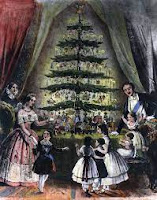
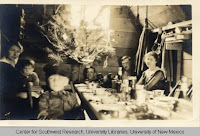
Christmas trees were popularized in the mid-1800s when Queen Victoria’s German husband brought the tradition from his homeland. Magazines picked up the story, and soon Americans embraced the practice as well. Living in the prairie where trees were scarce, most homesteaders probably didn’t put up a tree, but stockings and other decorations were popular. For those who did put up a tree, ornaments were bits of ribbon or yarn, berries, popcorn or paper strings, and other homemade decorations. 
 
The holiday meal was a big deal, and women pulled out all the stops to create a feast. Their husbands
Photo: UNM Archives
went hunting for game, while they baked bread and sweets as well as brought out preserved fruits and vegetables. Plum pudding would have been prepared well ahead to allow it time to age before Christmas dinner. 
 
Gifts would have been simple and primarily homemade, either because of the financial situation of the family or the lack of items available. Cornhusk or rag dolls for little girls, carved wooden toys, embroidered hankies, pillows, scarves, hats, mittens, and socks would be worked on during the year. If the family had a successful year, children might also find candy and other store-bought goodies in their stockings. 
 
Photo: WikiImages

Christmas eve traditions differed for each family, but many would gather to sing carols around the fireplace. On Christmas Day, most would head to church for a special service, then return home for the big meal and opening of presents. Afterward, if the weather was fine, they would travel around the community visiting with friends and neighbors. 
 
Wishing you a blessed Christmas and Happy New Year! 


____________________________
 
A Doctor in the House: A Christmas Romance

They’re supposed to be allies, but mutual distrust puts this pair on opposite sides. 
 
Emma O’Sullivan is one of the first female doctors to enlist after President Franklin Roosevelt signs the order allowing women in the Army and Navy medical corps. Within weeks, Emma is assigned to England to set up a convalescent hospital. She leaves behind everything that is familiar and arrives in the unfamiliar country a short time before Christmas. When the handsome widower of the requisitioned property claims she’s incompetent and tries to get her transferred, she must prove to her superiors she’s more than capable. But she’s soon drawn to the good-looking, grieving owner. Will she have to choose between her job and her heart? 
 
Archibald “Archie” Heron is the last survivor of the Heron dynasty, his two older brothers having been lost at Dunkirk and Trondheim and his parents in the Blitz. After his wife is killed in a bombing raid while visiting Brighton, he begins to feel like a modern-day Job. To add insult to injury, the British government requisitions his country estate, Heron Hall, for the U.S. Army to use as a hospital. The last straw is when the hospital administrator turns out to be a fiery, ginger-haired American woman. She’s got to go. Or does she?

Purchase Link: https://amzn.to/3E9HVXb